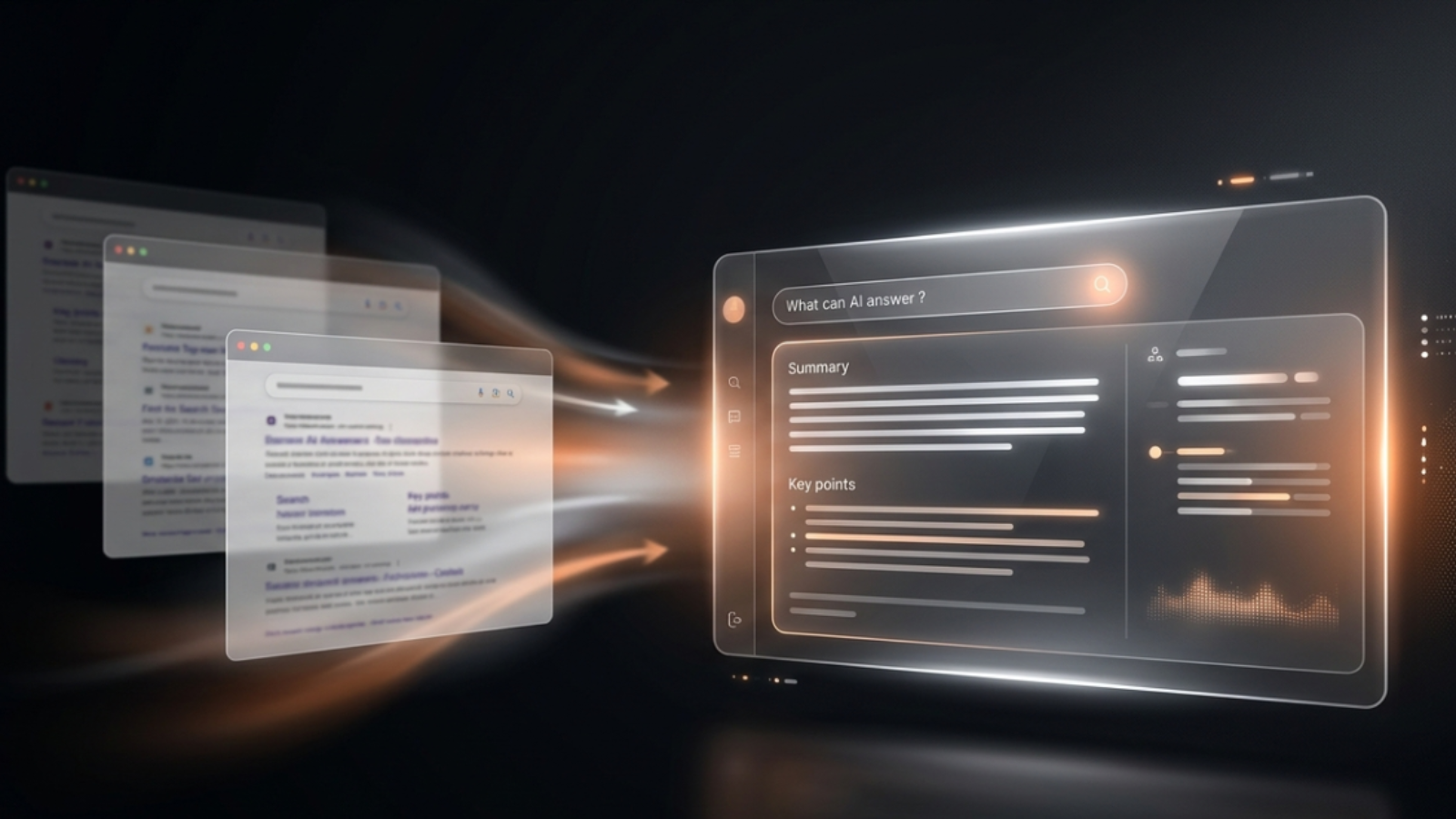
Ranking on page one used to mean people visit your site. In 2026, ranking on page one sometimes means Google answers the question and nobody clicks at all.
The Search Result That Goes Nowhere
Imagine spending months building your content strategy, writing optimised blog posts, earning backlinks, and finally watching your website climb to position one for a competitive search term. You check your analytics expecting a traffic boost. The ranking is confirmed. But the traffic barely moved.
This is the zero-click search problem. And it is affecting businesses and content creators at a scale that the SEO industry is only beginning to fully reckon with.
A zero-click search is any search query that gets answered directly on the search results page without the user needing to click through to any website. Featured snippets, knowledge panels, local packs, AI Overviews, and direct answer boxes all contribute to zero-click results. According to data from Semrush and Similarweb across multiple studies in 2023 and 2024, somewhere between fifty and sixty percent of Google searches now end without a click to any external website.
Let that number sit for a moment. More than half of all Google searches are being answered by Google itself, before anyone visits the website that provided the answer.
How We Got Here: The Evolution of Search Results
Search results pages looked very different ten years ago. Back then, users mostly saw ten blue links and perhaps a few ads at the top. As a result, they could click on a website, get their answer, and move on. The process was simple, direct, and highly favourable for anyone investing in SEO.
However, Google has been steadily redesigning its results page over the years. It has introduced features that keep users within its ecosystem instead of sending them to external websites. For example, knowledge panels pull information from structured databases to provide instant factual answers. Similarly, featured snippets extract important passages from websites and display them directly on the search page. In addition, local packs help users by showing map results and business information for location-based searches. More recently, AI Overviews have taken this a step further by using generative AI to combine information from multiple sources into a single answer displayed above traditional results.
While these features serve real user needs by delivering faster answers, they also create a major shift. As a consequence, traffic that once flowed to websites increasingly remains within Google itself.
Which Types of Businesses Are Most Affected
Informational Content Publishers
Blogs and websites that built their traffic model on answering straightforward factual questions have been hit hardest. If your content strategy was built around queries like “what is content marketing” or “how many calories in a banana” or “best time to post on Instagram”, those queries are increasingly being answered by Google before anyone reaches you. The entire category of simple, question-and-answer content has been partially absorbed by the search results page itself.
Local Businesses Competing for Map Pack Visibility
The local search landscape has actually become more nuanced. For many location-based queries, the map pack has replaced the traditional organic results as the primary interface. A restaurant, clinic, or retail store that appears prominently in the local pack with strong reviews and complete profile information may actually be winning more business from zero-click searches than from organic website visits. The local pack is a zero-click format in that users often get the address, phone number, and reviews they need without visiting the website. But it is a positive zero-click experience because the business still gets found and contacted.
Ecommerce and Transactional Sites
Businesses with clear transactional intent behind their searches have been somewhat more insulated from zero-click losses. When someone searches “buy running shoes online” or “dental clinic appointment Chennai”, the intent is clear enough that Google has less ability to fully satisfy the need within the search results page. These queries still tend to drive clicks. The problem is at the top of the funnel, in the informational and research phases where zero-click answers are most prevalent.
The Real Opportunity Inside the Problem
Here is the reframe that changes how you think about zero-click searches: being the source that Google cites for a zero-click answer is not a loss. It is a form of brand visibility that has real value even without the click.
Brand Impressions Without Clicks Still Build Recognition
When your website is the source attributed in a featured snippet or AI Overview, your brand name appears prominently on the search results page. Millions of people who never visit your website see your name associated with an authoritative answer to their question. Over time, these repeated brand impressions build recognition and credibility that influences purchase decisions when those users reach a buying stage.
Complex Queries Still Need Clicks
Zero-click results are most effective for simple, factual queries. Complex, nuanced, opinion-based, or deeply specific queries still require the user to visit websites because no summary can fully satisfy them. This is where content strategy needs to pivot. Stop investing heavily in the simple question-and-answer content that Google has effectively absorbed. Start investing in the complex, experience-based, deeply specific content that AI summaries cannot replicate and that users must click through to fully access.
What to Actually Do About This
Optimise for Featured Snippets Intentionally
If zero-click results are going to happen anyway, being the source Google cites is better than not being cited at all. Structure your content to answer specific questions clearly and concisely within well-formatted sections. Use the exact phrasing of the question as a subheading. Provide a direct, two-to-three sentence answer immediately below.
Build for Intent Clusters, Not Individual Keywords
Instead of targeting a single keyword that might generate a zero-click result, build content clusters that address an entire topic at multiple levels of depth and specificity. But the follow-up query, the more specific version, the comparison search, the implementation question all of these require deeper content that earns the click.
Invest in Channels You Control
The zero-click problem is ultimately an argument for diversifying beyond organic search as your primary audience acquisition channel. Email lists, community platforms, YouTube channels, podcast audiences, and direct social followings are all relationships where you are not dependent on a search engine deciding to send you traffic. Every subscriber, viewer, or community member you have is a relationship that zero-click searches cannot erode.
Final Thoughts: Visibility Has Expanded Beyond the Click
The zero-click world is not the end of search marketing. It marks a shift where success goes beyond traffic to include brand visibility, citation authority, and topic ownership.
The brands that adapt to this reality will stop obsessing over click-through rates from every query and start building a presence that earns recognition across the entire search results page, not just the organic links. They will create content that is deep enough and specific enough that Google cannot fully answer it for the user. And they will invest in owned audiences that make them less dependent on search traffic entirely.
In the zero-click era, the goal is not just to rank. The goal is to be known.