
det (5)

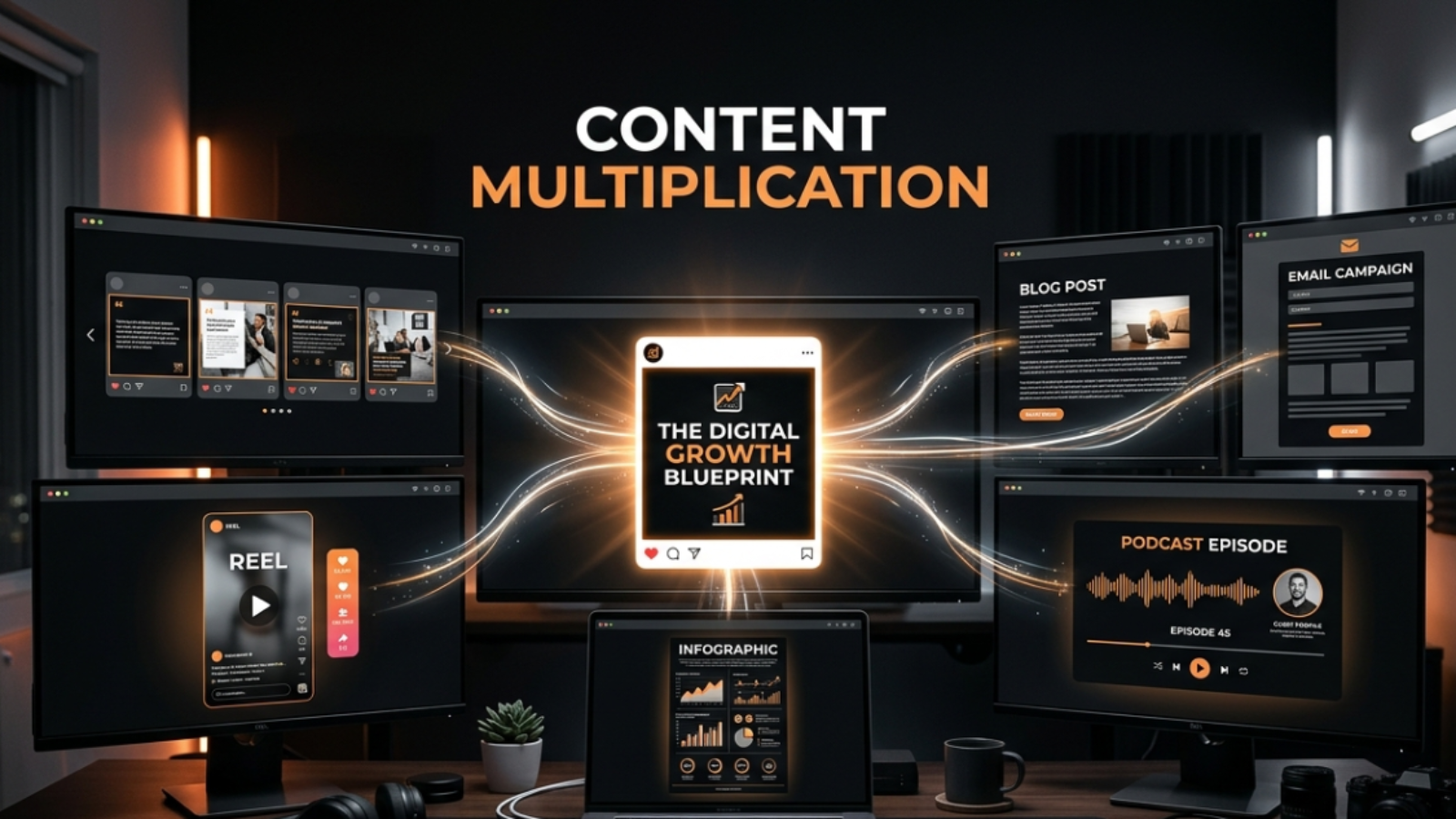
You Are Sitting on a Goldmine and Do Not Know It: How to Turn One Piece of Content Into Ten

Most businesses are not short on content. They are short on a system to make their content work harder than it currently does.

The Treadmill Nobody Talks About

There is a particular kind of exhaustion that content creators and marketing teams know well. It is the feeling of having published something, watched it get a decent amount of engagement for a day or two, and then having it disappear into the archive while the clock starts ticking on what to create next. The content treadmill. You keep running but the ground keeps moving and you never actually get anywhere.

The brutal irony is that most businesses are sitting on months or years of content that has already done the hard work of being created, researched, and published. They just never built a system to make that content travel further than its original format and platform.

Content repurposing is not a shortcut or a lazy workaround. It is a strategic discipline that the most efficient content marketing teams in the world treat as seriously as original content creation. And when it is done well, it multiplies the return on every piece of content you produce without proportionally multiplying the effort.

This blog is about how to build that system, what it looks like in practice, where it goes wrong, and why your best existing content is almost certainly your most underused marketing asset.

What Content Repurposing Actually Means

Repurposing is not copying and pasting the same content across different platforms. That is spam and it damages both your brand and your discoverability. Repurposing is the practice of taking the core idea, insight, or story from one piece of content and translating it into different formats, lengths, and contexts that serve different audiences and consumption habits.

A 2000-word blog post contains multiple ideas. Each of those ideas could be a LinkedIn post, a Twitter thread, a short-form video script, an email newsletter section, a carousel slide deck, a podcast talking point, or an infographic. The blog is not the final product. It is the source material. The final products are the ten to fifteen pieces of content that branch out from it across the platforms where your different audiences actually spend their time.

The Repurposing Playbook

Turn a Blog Post Into Short-Form Video

Every well-structured blog post has three to five main points. Each of those points is a short-form video. You do not need to summarise the entire blog. Take the single most surprising or counterintuitive point from the post and build a sixty-to-ninety second Reel or YouTube Short around it. End with a hook that directs the viewer to the full blog for more depth. You are not condensing the content. You are creating a doorway into it.

From Blog Post to Carousel

Carousels are among the highest-performing content formats on Instagram and LinkedIn right now. A blog post with five distinct sections becomes a five to eight slide carousel naturally. Each section heading becomes a slide headline. The opening paragraph of each section becomes the slide copy. The conclusion becomes the final call to action slide. The carousel does not replace the blog. It introduces the ideas to a visual audience that might never have found the blog otherwise.

From Blog Post to Email Newsletter

Your email subscribers are a different audience from your social followers in a very important way: they opted in to hear from you directly. They deserve more than a link to your latest post. Take one strong insight from the blog, expand it slightly with a personal angle or additional context, and write it as the main body of a newsletter. Include a brief paragraph at the end pointing to the full blog for readers who want to go deeper. The newsletter feels original. The source material was already written.

From Blog Post to Quote Graphics

Every well-written blog contains two or three sentences that are genuinely quotable. Pull them out. Put them on clean, brand-consistent graphic templates. Post them as standalone content on Instagram, LinkedIn, or WhatsApp Status. These quote graphics perform particularly well because they are easy to save and share, they build brand recognition around your thinking, and they take approximately ten minutes to produce once the blog has already been written.

From Multiple Blog Posts to a Comprehensive Guide

If you have published several posts on related topics, they can be assembled and lightly edited into a long-form downloadable guide or ebook. This serves a completely different purpose from the individual posts. It positions your brand as an authority on the topic, it gives you a lead magnet to build your email list, and it extends the shelf life of content that would otherwise sit dormant in your blog archive.

Where Repurposing Goes Wrong

Repurposing Without Adapting for the Platform

Every platform has its own culture, its own tone, and its own content norms. A blog excerpt posted verbatim to LinkedIn feels lazy and out of place. A caption that works for Instagram feels formal and strange on WhatsApp. Repurposing does not mean copying. It means translating. The idea stays the same. The format, the length, the voice, and the context all need to be adapted for where it is landing.

Repurposing Weak Content More Broadly

Not every piece of content deserves to be repurposed. If the original post performed poorly because the idea was not strong, the insight was not original, or the execution was mediocre, spreading it further does not fix any of those problems. It just puts mediocre content in more places. Repurposing amplifies quality. It does not compensate for the absence of it.

Over-Repurposing to the Same Audience

If the same audience follows you across multiple platforms and sees the same core idea repeated five times in a week across different formats, it feels repetitive rather than strategic. Repurposing works best when different formats reach genuinely different audience segments. The person who reads your blog is often not the same person who watches your Reels. Distribute across platforms precisely because the audiences are different, not despite it.

Building a Repurposing System That Runs Without Burning You Out

Start With a Content Audit

Before you create anything new, go through what you have already published. Look specifically for the content that performed best, content that covered evergreen topics that are still relevant today, and content where you had genuinely strong ideas that might not have reached a large audience the first time around. This archive is your repurposing starting point.

Build a Simple Content Map

For each piece of primary content you create, map out in advance which secondary formats you will produce from it and which platforms each format will live on. This does not need to be elaborate. A simple spreadsheet with the original piece in one column and the repurposed formats in subsequent columns is enough to build the habit of thinking about content as a system rather than a series of one-off posts.

Batch the Repurposing Work

Repurposing is most efficient when it is done in batches rather than immediately after each piece of original content. Set aside a dedicated block of time each week or fortnight to process your recent primary content into secondary formats. This batching approach prevents the creative context-switching that happens when you are constantly moving between original creation and format adaptation.

Final Thoughts: One Good Idea Deserves More Than One Audience

The content creation challenge most businesses face is not a shortage of ideas. It is a shortage of systems for making good ideas reach every audience that would benefit from them.

A genuinely useful insight does not stop being useful because it appeared in a blog post two months ago. Instead, it stops being useful when the people who need it never encounter it in the format they actually consume. In other words, the value of content is determined not only by its quality but also by its ability to reach the right audience through the right channel . Repurposing is not about recycling old content. It is about believing that the thinking you put into a good idea deserves to reach every person it could help, in whatever format they are most likely to engage with.

Work smarter with what you already have. The goldmine is already there.

mylstone 5 blog (2)

Mega Influencers Are Overrated: Why Micro Creators Are Winning the Trust Economy

A million followers does not mean a million people are listening. It means a million people clicked a button at some point in the past.

The Celebrity Endorsement Dream That Is Costing Brands a Fortune

There is a moment that happens in a lot of marketing planning meetings when someone says the words that sound like a guaranteed strategy: “What if we got a big influencer?” The room gets a little more excited. Someone opens Instagram and starts looking at profiles with seven-figure follower counts. Numbers are thrown around. A budget is identified. And then, months later, the campaign analytics come back and the results are… underwhelming.

This is one of the most common and most expensive disappointments in digital marketing right now. Brands spend significant portions of their marketing budget on macro and mega influencers, primarily because the follower count feels like a proxy for reach and influence. But follower count and actual influence stopped being the same thing a long time ago.

This blog is about why the influencer marketing landscape has shifted so dramatically, what the data actually says about micro creators, and how businesses of every size can build more effective partnerships with the people who are genuinely trusted by their communities.

Understanding the Influencer Tiers First

The influencer ecosystem is typically divided into four broad tiers based on follower count. Nano influencers have between one thousand and ten thousand followers. Micro influencers sit between ten thousand and one hundred thousand. Macro influencers have between one hundred thousand and one million. And mega or celebrity influencers have over a million followers.

The conventional wisdom, for most of the last decade, was that bigger was better. The logic was straightforward: more followers means more people see the content, more people see the content means more conversions. This logic is not entirely wrong. It is just incomplete, and the parts it misses are exactly the parts that determine whether a campaign actually works.

The Numbers That Changed the Conversation

Engagement Rates Tell a Different Story

Multiple industry studies on influencer marketing performance over the past three years have consistently found the same pattern: engagement rates decline as follower counts increase. Micro influencers in the ten thousand to one hundred thousand range typically generate engagement rates between three and eight percent. Mega influencers with over a million followers frequently see engagement rates below one percent. This is not a marginal difference. It is the difference between a community that genuinely listens and an audience that passively follows.

Trust Is the Currency That Matters Most

Nielsen’s annual global trust report consistently shows that people trust recommendations from people they feel are like them far more than they trust celebrity endorsements or traditional advertising. A micro influencer who built their following by sharing honest reviews of restaurants in Bengaluru, or documenting their journey through fertility treatment, or teaching small business accounting in Tamil, has something a mega influencer almost never has: perceived peer status. Their followers feel like they know them. And people act on recommendations from people they feel like they know.

Cost Per Genuine Engagement Is Dramatically Lower

When you divide the cost of a mega influencer partnership by the number of people who actually engaged with the branded content rather than just scrolled past it, the math rarely looks good. Micro influencer partnerships, even when you run five or ten of them simultaneously to match the raw reach of a single macro deal, often deliver a significantly lower cost per genuine engagement and a meaningfully higher conversion rate. The economics of micro influencer marketing have become impossible to ignore.

The Real Challenges of Working With Micro Creators

It would be misleading to suggest that micro influencer marketing is without friction. It has specific challenges that brands need to plan for.

Scale Requires Volume and Volume Requires Systems

Running one mega influencer campaign requires one contract, one brief, one set of approvals, and one round of content review. Running fifteen micro influencer campaigns requires fifteen of everything. The operational overhead is real and without proper management systems, influencer marketing software, or a dedicated team, it can become chaotic quickly. Brands that try to scale micro influencer programmes without the right infrastructure often end up with inconsistent messaging and patchy execution.

Quality Control Across Multiple Creators

Every micro influencer has their own voice, their own aesthetic, and their own relationship with their audience. This is exactly what makes them effective, but it also means that maintaining brand consistency across multiple creator partnerships is genuinely difficult. Too strict a brief kills authenticity. Too loose a brief produces content that does not feel like your brand. Finding the right balance requires experience and often a lot of trial and error.

Vetting Is More Work but More Important

With mega influencers, vetting is relatively straightforward. The profile is public, the history is documented, and the audience demographics are usually available through media kits. With micro influencers, especially in emerging niches or regional markets, vetting requires more effort. Fake followers, artificially inflated engagement through pods, and audiences that do not match the claimed demographics are real problems in the micro influencer space.

How to Build a Micro Influencer Strategy That Actually Works

Start With Niche Alignment, Not Numbers

The most important criterion for choosing a micro influencer partner is not their follower count. It is the specificity of their niche and the depth of their authority within it. A nutritionist with eight thousand followers in your city who speaks directly to the demographic you are trying to reach will consistently outperform a lifestyle blogger with eighty thousand followers whose audience is scattered across multiple interests and geographies.

Build Relationships, Not Transactions

The micro influencer partnerships that produce the best long-term results are the ones that feel like genuine relationships rather than paid transactions. Engage with their content before you approach them. Offer product experiences rather than scripted endorsements. Give them creative latitude. Check in on campaign performance together and treat their feedback as valuable insight. Micro influencers who genuinely believe in what they are promoting produce content that their audiences can feel is authentic. And authenticity is the only thing that drives real purchasing decisions.

Measure the Right Things

Stop measuring micro influencer campaigns by impressions. Measure them by link clicks, promo code redemptions, direct messages mentioning the creator, and actual conversions. These are the numbers that tell you whether the partnership created genuine action. Impressions tell you how many times your content appeared on a screen. They say nothing about whether anyone cared.

Final Thoughts: Trust Has Always Been the Product

Influencer marketing, at its best, has always been a trust transfer. A person your potential customer already trusts tells them about your brand, and some of that trust flows in your direction. The mechanics have changed dramatically since the early days of Instagram sponsorships, but this core dynamic has not.

The question every brand should be asking is not “how many people will see this?” but “how many people who see this will actually trust the person showing it to them?” That question almost always points toward the micro creator with a deeply connected, highly engaged community of ten thousand people rather than the celebrity with a million passive followers.

In the trust economy, smaller and more specific has become more powerful than big and broad.

mylstone 5 blog (1)

Everyone Said Email Was Dead. Here Is Why It Just Had Its Best Year Yet

While every brand was chasing the algorithm, the inbox was quietly becoming the most valuable piece of digital real estate in marketing.

The Obituary Nobody Should Have Written

Every few years, someone publishes a confident piece declaring email marketing dead.The prediction surfaced when Facebook crossed a billion users, returned again as Instagram exploded in popularity, and appeared once more during TikTok’s rapid rise. And every single time, email survived the prediction, expanded its user base, and generated better returns than the platforms that claimed they would replace it.

Here is what the death notices keep missing: email is not a media channel competing with social platforms. It is a direct line of communication that a person has voluntarily opened between themselves and a business. An unpredictable algorithm does not control your visibility. Platform updates cannot suddenly separate you from your audience without their choice, and a policy change cannot erase the email list you spent years building.

In 2024, global email marketing revenue was estimated at over ten billion dollars. The number of email users worldwide crossed 4.5 billion. The average return on investment for email marketing, reported consistently across multiple industry studies, sits somewhere between thirty-six and forty-two dollars for every dollar spent. No other marketing channel comes close to that number.

This blog is about why email has not just survived but accelerated, what the brands doing it well understand that most brands do not, and what the genuine challenges of email marketing look like when you go past the headline statistics.

Why the Inbox Became the Most Valuable Real Estate in Digital Marketing

You Own the Relationship

A single Instagram algorithm update can destroy organic reach overnight. Platforms that begin prioritising paid distribution often make years of audience-building far less valuable. Entire communities can also disappear when a social network shuts down or simply falls out of relevance, taking your hard-earned followers with it. None of this is true with email. Your subscriber list is yours. It sits in your database. It travels with you across platforms, tools, and business changes. In a media landscape increasingly controlled by platforms with their own commercial interests, that ownership is extraordinarily valuable.

The Signal-to-Noise Ratio Is Shifting in Email’s Favour

Social media feeds have become so saturated with content, advertisements, and algorithmically recommended posts that the signal-to-noise ratio for any individual brand’s organic posts has become genuinely terrible. A Facebook page with ten thousand followers might reach three hundred people with an organic post. An email list of ten thousand subscribers, with a decent open rate, puts a message in front of two to three thousand people who actively chose to receive communication from you. The inbox, counterintuitively, has become less crowded and more intentional than the social feed.

Privacy Changes Have Made First-Party Data More Important Than Ever

Apple’s iOS privacy updates, the phasing out of third-party cookies, and increasing global data protection regulation have made it progressively harder for brands to reach audiences through third-party data targeting. Email subscribers are first-party data at its most direct. They gave you their email address. They told you they want to hear from you. In a world where third-party targeting is increasingly restricted, first-party relationships like email subscribers are the most valuable audience asset a business can have.

The Honest Problems With Email Marketing

Email marketing is not without its very real challenges, and understanding them honestly is the only way to address them effectively.

Inbox Competition Is Genuinely Fierce

The average office worker receives over one hundred emails per day. Consumer inboxes are not much calmer. Getting someone to open your email when it is sitting next to twelve other emails from brands they also subscribed to requires a subject line that earns attention, a sender name they recognise and trust, and a timing decision that puts you in their inbox when they are most likely to be receptive. None of these things are simple and all of them require testing, iteration, and genuine skill.

Deliverability Is a Technical Problem That Kills Good Campaigns

You can write the most compelling email in the world and it will do nothing if it lands in the spam folder. Email deliverability is a technical discipline that many businesses completely neglect until it becomes a crisis. Domain authentication, list hygiene, sending frequency, complaint rates, and engagement signals all affect whether your emails reach the inbox or the junk folder. Brands that treat email as a simple broadcast tool without understanding deliverability often wonder why their results are declining, not realising that a growing percentage of their emails are never being seen.

Generic Emails Are Worse Than No Emails

An email that feels irrelevant to the person receiving it does not just get ignored. It trains them to ignore you. Every irrelevant email that lands in someone’s inbox reduces their likelihood of opening the next one. Over time, a brand that sends generic, untargeted email blasts to its entire list is not just wasting money. It is actively eroding the relationship it built to earn those subscribers in the first place.

What the Brands Getting Email Right Are Actually Doing

They Treat the Subject Line as the Most Important Piece of Writing They Do

The subject line determines everything. An email that never gets opened delivers zero value regardless of how good the content inside is. The best email marketers spend as much time on subject lines as they do on the email body. Multiple variants are tested constantly, while open-rate data is analysed obsessively to understand what actually captures attention. Curiosity, specificity, and relevance consistently emerge as the strongest drivers of opens, so the highest-performing brands build their subject lines around at least one of those elements every time.

They Segment Like Their Revenue Depends on It, Because It Does

Sending the same email to a subscriber who joined your list yesterday and a customer who has bought from you six times over three years is a missed opportunity of significant scale. The most effective email programmes use behavioural segmentation to ensure that every subscriber receives content that is relevant to where they are in their relationship with the brand. New subscribers get onboarding sequences. Lapsed customers get re-engagement campaigns. Loyal buyers get early access and rewards. Everyone else gets a carefully tiered version of the standard newsletter.

They Write Like a Human Being, Not a Brand

The emails people actually read and look forward to receiving are the ones that sound like they came from a person who has something interesting to say, not from a marketing department fulfilling a content calendar obligation. Plain text emails from founders or team members consistently outperform heavily designed HTML templates in many categories. The personal voice, the honest observation, the willingness to share something that goes slightly beyond the product, these are the things that make someone look forward to seeing your sender name in their inbox.

Final Thoughts: The Channel That Keeps Outlasting Its Replacement

Email has outlasted MySpace, Orkut, Vine, Google Plus, and every other platform that was supposed to render it obsolete. It will probably outlast several more. Not because it is the most exciting channel or the most innovative, but because it is built on something no algorithm can replicate: a person’s direct, voluntary permission for you to communicate with them.

That permission is rare. It is earned slowly and lost quickly. And when it is treated with the respect it deserves, it generates returns that no other marketing channel can consistently match.

Build the list. Earn the open. Write like a human. Repeat.

det (3)

How Amul Has Been Telling the Same Story for 50 Years and Why It Still Works

In a country where brands rise and fall faster than monsoon floods, one cartoon girl on a butter packet has stayed relevant through every generation, every political era, and every media revolution.

The Brand That Refuses to Go Out of Style

If you grew up in India, you do not need to be told what Amul is. Chances are, you have seen Amul butter on your breakfast table countless times. Along the way, you have smiled at topical ads that commented on cricket scandals, political events, Bollywood controversies, and global news moments through the lens of a round-faced cartoon girl in a polka-dot dress. In fact, a specific Amul ad from your childhood may still be sitting somewhere in your memory, ready to resurface at a moment’s notice.

Amul’s Utterly Butterly Girl debuted in 1966. She has been running continuously ever since, making her arguably the longest-running advertising campaign in Indian history and one of the longest-running campaigns of any kind anywhere in the world.

The question worth asking is not just what Amul has done. It is what Amul understood about brand storytelling that most companies never figure out, and what any business can take from that understanding regardless of their size, budget, or industry.

The Core Principle: One Voice, Infinite Conversations

The most important thing to understand about Amul’s communication strategy is the distinction between their brand voice and their brand content. The voice has never changed. Warm, witty, and irreverent without being offensive, its voice is rooted in the everyday experiences of the Indian middle class. Rather than speaking to a specific group, it connects with everyone without alienating anyone. Think of it as the knowing neighbour with a sharp observation, a quick smile, and a knack for capturing the mood of the moment.

The content, however, has changed constantly. Every topical ad is a fresh conversation about something happening in the world right now. This is the architecture that makes Amul so durable: the personality is absolutely fixed while the subject matter is perpetually current. The brand never feels stale because it is always talking about something new. But it never feels unfamiliar because it always sounds like itself.

This is a distinction most brands completely miss. They confuse consistency of voice with repetition of content and end up doing one of two things. Either they produce the same content over and over until their audience tunes out, or they change their voice so frequently to keep things fresh that their audience never knows who they are talking to.

Why the Topical Strategy Works So Well in India

India Is a Nation of Shared Moments

Cricket. Bollywood. Politics. Festivals. These are not niche interests in India. They are the cultural connective tissue that a country of 1.4 billion people shares across languages, regions, and economic backgrounds. Amul understood this before the concept of cultural marketing was even widely theorised. By inserting their brand voice into the national conversation around these shared moments, they made Amul feel like a participant in Indian life rather than a product being advertised.

The Pun as a Brand Signature

Every Amul topical ad is built around a pun, almost always involving dairy terminology. Butter. Cream. Milk. These puns are genuinely clever, sometimes groan-inducing, always memorable. They serve a dual purpose. They are funny enough to make you stop and smile, which is the primary goal of any content in a crowded media environment. And they always bring the language back to Amul’s product category, which is extraordinarily subtle brand reinforcement disguised as wordplay.

Responding Faster Than Any Agency Should Be Able To

One of the most remarkable things about the Amul campaign is the speed with which topical ads appear. Within hours or days of a major news event, the Amul girl has already commented on it. In an era of social media where cultural moments have half-lives measured in days, this speed is the difference between relevance and irrelevance. DaCunha Communications, the agency that has run this campaign for decades, has built systems and a level of creative trust with the client that allows them to move at a pace most brand approval processes would make impossible.

What Amul Gets Wrong and Where the Limits Show

An honest analysis has to include the places where even Amul’s strategy has shown its limits.

The Digital Transition Has Been Uneven

Amul’s outdoor hoarding campaigns are legendary. The digital adaptation of the same topical strategy has been more mixed. Social media posts of the topical ads do get shared, but the brand’s broader digital presence, including its website experience and its approach to video content, has not consistently matched the quality and sharpness of the print campaign. For younger consumers who encounter Amul primarily through digital channels, the brand experience is not always as cohesive as it is for those who grew up with the hoardings.

The Product Portfolio Story Is Harder to Tell

Amul has expanded significantly beyond butter into cheese, ice cream, milk, chocolates, and a range of other dairy products. The brand architecture for this extended portfolio is considerably less clear than the iconic butter campaign. The Amul girl works brilliantly as a symbol for butter. As a unifying symbol for a diverse dairy business competing in categories like premium ice cream where brand personality requirements are different, her power is more diluted.

The Lessons Any Business Can Steal

Define Your Voice Precisely and Then Never Waver From It

Amul’s voice is not vaguely described as friendly or approachable. It is specifically witty, topical, warm, and pun-driven. That level of specificity is what allows multiple people across multiple decades to maintain a consistent brand voice without it drifting. Write your brand voice guidelines with enough detail that a new team member who has never spoken to the founders can pick up and sound exactly right.

Find Your Version of Cultural Relevance

You do not need the national conversations that Amul taps into. You need the conversations happening within your specific community. For a dental clinic in Chennai, that might be responding to local health news or cricket results with a clever oral health angle. For a boutique clothing brand in Hyderabad, it might be creating content around local festivals with a point of view that only your specific brand could have. Cultural relevance does not require scale. It requires attention and specificity.

Longevity Is a Strategy, Not a Sentimental Choice

One of the biggest mistakes brands make is confusing consistency with stagnation. Amul proves that you can keep the same fundamental identity for half a century and still feel fresh, relevant, and worth paying attention to. The Utterly Butterly Girl is not still running because Amul is sentimental about her. She is still running because consistency compounds. Every year she stays recognisable is another year of brand equity built on top of the years before.

Final Thoughts: The Best Brand Stories Are Never Actually Finished

The reason Amul’s story has lasted fifty years is not luck or nostalgia. It is the result of a very deliberate decision made a very long time ago: to build a brand personality so specific and so consistently executed that it becomes genuinely irreplaceable.

Most brands change their identity the moment they feel like it is not working. Amul changed the content while keeping the identity, and that single discipline is worth more than any amount of creative reinvention. Reinvention resets the equity you have built. Evolution builds on top of it.

The question for your brand is not whether you should tell a consistent story. It is whether you are willing to commit to one specific enough to actually build something lasting.

mylstone 5 blog

Google Is Answering Your Customers Before They Ever See Your Website: The Zero-Click Search Problem

Ranking on page one used to mean people visit your site. In 2026, ranking on page one sometimes means Google answers the question and nobody clicks at all.

The Search Result That Goes Nowhere

Imagine spending months building your content strategy, writing optimised blog posts, earning backlinks, and finally watching your website climb to position one for a competitive search term. You check your analytics expecting a traffic boost. The ranking is confirmed. But the traffic barely moved.

This is the zero-click search problem. And it is affecting businesses and content creators at a scale that the SEO industry is only beginning to fully reckon with.

A zero-click search is any search query that gets answered directly on the search results page without the user needing to click through to any website. Featured snippets, knowledge panels, local packs, AI Overviews, and direct answer boxes all contribute to zero-click results. According to data from Semrush and Similarweb across multiple studies in 2023 and 2024, somewhere between fifty and sixty percent of Google searches now end without a click to any external website.

Let that number sit for a moment. More than half of all Google searches are being answered by Google itself, before anyone visits the website that provided the answer.

How We Got Here: The Evolution of Search Results

Search results pages looked very different ten years ago. Back then, users mostly saw ten blue links and perhaps a few ads at the top. As a result, they could click on a website, get their answer, and move on. The process was simple, direct, and highly favourable for anyone investing in SEO.

However, Google has been steadily redesigning its results page over the years. It has introduced features that keep users within its ecosystem instead of sending them to external websites. For example, knowledge panels pull information from structured databases to provide instant factual answers. Similarly, featured snippets extract important passages from websites and display them directly on the search page. In addition, local packs help users by showing map results and business information for location-based searches. More recently, AI Overviews have taken this a step further by using generative AI to combine information from multiple sources into a single answer displayed above traditional results.

While these features serve real user needs by delivering faster answers, they also create a major shift. As a consequence, traffic that once flowed to websites increasingly remains within Google itself.

Which Types of Businesses Are Most Affected

Informational Content Publishers

Blogs and websites that built their traffic model on answering straightforward factual questions have been hit hardest. If your content strategy was built around queries like “what is content marketing” or “how many calories in a banana” or “best time to post on Instagram”, those queries are increasingly being answered by Google before anyone reaches you. The entire category of simple, question-and-answer content has been partially absorbed by the search results page itself.

Local Businesses Competing for Map Pack Visibility

The local search landscape has actually become more nuanced. For many location-based queries, the map pack has replaced the traditional organic results as the primary interface. A restaurant, clinic, or retail store that appears prominently in the local pack with strong reviews and complete profile information may actually be winning more business from zero-click searches than from organic website visits. The local pack is a zero-click format in that users often get the address, phone number, and reviews they need without visiting the website. But it is a positive zero-click experience because the business still gets found and contacted.

Ecommerce and Transactional Sites

Businesses with clear transactional intent behind their searches have been somewhat more insulated from zero-click losses. When someone searches “buy running shoes online” or “dental clinic appointment Chennai”, the intent is clear enough that Google has less ability to fully satisfy the need within the search results page. These queries still tend to drive clicks. The problem is at the top of the funnel, in the informational and research phases where zero-click answers are most prevalent.

The Real Opportunity Inside the Problem

Here is the reframe that changes how you think about zero-click searches: being the source that Google cites for a zero-click answer is not a loss. It is a form of brand visibility that has real value even without the click.

Brand Impressions Without Clicks Still Build Recognition

When your website is the source attributed in a featured snippet or AI Overview, your brand name appears prominently on the search results page. Millions of people who never visit your website see your name associated with an authoritative answer to their question. Over time, these repeated brand impressions build recognition and credibility that influences purchase decisions when those users reach a buying stage.

Complex Queries Still Need Clicks

Zero-click results are most effective for simple, factual queries. Complex, nuanced, opinion-based, or deeply specific queries still require the user to visit websites because no summary can fully satisfy them. This is where content strategy needs to pivot. Stop investing heavily in the simple question-and-answer content that Google has effectively absorbed. Start investing in the complex, experience-based, deeply specific content that AI summaries cannot replicate and that users must click through to fully access.

What to Actually Do About This

Optimise for Featured Snippets Intentionally

If zero-click results are going to happen anyway, being the source Google cites is better than not being cited at all. Structure your content to answer specific questions clearly and concisely within well-formatted sections. Use the exact phrasing of the question as a subheading. Provide a direct, two-to-three sentence answer immediately below.

Build for Intent Clusters, Not Individual Keywords

Instead of targeting a single keyword that might generate a zero-click result, build content clusters that address an entire topic at multiple levels of depth and specificity. But the follow-up query, the more specific version, the comparison search, the implementation question all of these require deeper content that earns the click.

Invest in Channels You Control

The zero-click problem is ultimately an argument for diversifying beyond organic search as your primary audience acquisition channel. Email lists, community platforms, YouTube channels, podcast audiences, and direct social followings are all relationships where you are not dependent on a search engine deciding to send you traffic. Every subscriber, viewer, or community member you have is a relationship that zero-click searches cannot erode.

Final Thoughts: Visibility Has Expanded Beyond the Click

The zero-click world is not the end of search marketing. It marks a shift where success goes beyond traffic to include brand visibility, citation authority, and topic ownership.

The brands that adapt to this reality will stop obsessing over click-through rates from every query and start building a presence that earns recognition across the entire search results page, not just the organic links. They will create content that is deep enough and specific enough that Google cannot fully answer it for the user. And they will invest in owned audiences that make them less dependent on search traffic entirely.

In the zero-click era, the goal is not just to rank. The goal is to be known.

mylstone (1)

Why You Chose That Brand Without Even Knowing It: The Colour Psychology Playbook

Colour is not decoration. It is the first conversation your brand has with every person who encounters it.

The Decision You Made Before You Made a Decision

Picture this. You are standing in a pharmacy, looking at two identical pain relievers, same active ingredient, same dosage, same price. One box is white with blue typography. The other is red and orange with bold black text. Without reading a single word on either box, your brain has already formed an opinion about which one is stronger, which one is gentler, and which one you are more likely to reach for.

That is colour psychology at work. And it is happening every single time a person encounters your brand, whether you have thought about it or not.

Research from the University of Loyola found that colour increases brand recognition by up to 80 percent. A separate study on consumer purchasing behaviour found that up to 90 percent of snap judgments about products are based on colour alone. These are not small margins. These are the numbers that separate brands people remember from brands people walk past.

This blog is about why colour matters far more than most small businesses realise, how the big brands have used it to wire themselves into consumer psychology, and what you can actually do with this knowledge for your own brand.

How Colour Actually Works on the Human Brain

Colour is processed in a different part of the brain than language. While words have to be decoded, interpreted, and understood consciously, colour hits the limbic system, the part of your brain responsible for emotion and memory, almost instantaneously. This is why you feel something about a colour before you think something about it.

Different colours trigger different emotional responses, and while there is cultural variation in some of these associations, many of them are remarkably consistent across cultures. Red creates urgency and intensity. It raises the heart rate. It is why clearance sales and warning signs use it. Blue creates trust, calm, and competence. It is why banks, hospitals, and technology companies cluster around it. Yellow signals optimism and energy but can tip into anxiety if overused. Green connects to growth, health, and safety. Black signals luxury, authority, and sophistication.

None of this is accidental. The brands that have built the most recognisable visual identities in the world did not choose their colours because they looked nice. They chose them because they wanted to own a specific feeling in the consumer’s mind.

The Brands That Mastered This and What They Were Actually Doing

Coca-Cola and the Ownership of Red

Coca-Cola’s red is one of the most studied examples of colour branding in history. The specific shade, now known informally as Coca-Cola red, was not chosen randomly. Red communicates excitement, passion, and energy. It creates appetite. It demands attention. Over more than a century of consistent application across every single touchpoint, Coca-Cola has not just used the colour red. They have essentially claimed ownership of what that red means in the context of enjoyment and refreshment.

Tiffany and the Power of a Single Pantone Number

Tiffany Blue, formally registered as Pantone 1837, is one of the few colours in history that a brand has trademarked so completely that people recognise the packaging before they can read the name on it. The blue was chosen because it signalled elegance, rarity, and desirability without being cold or austere. The box became the product. People did not just want what was inside it. They wanted the experience of receiving and carrying that particular shade of blue. That is colour psychology operating at its most powerful level.

Why All the Tech Giants Chose Blue

Facebook, Samsung, LinkedIn, PayPal, Dell, Twitter before the rebrand. The concentration of blue across the technology sector is not a coincidence. When the internet economy was being built, these companies needed to overcome something significant: consumer distrust. Handing your personal data, your financial information, and your communication to digital platforms was not comfortable for most people in the early years. Blue did a lot of the psychological heavy lifting, communicating reliability and trustworthiness at a time when these platforms desperately needed people to believe they were safe.

The Problems That Come With Colour Decisions

Colour psychology is powerful, but it is not a simple formula you can apply without thinking about context. There are real pitfalls that businesses walk into regularly.

Cultural Context Changes Everything

White signifies purity and weddings in Western cultures. In parts of East Asia, it is associated with mourning. Green has deeply positive environmental associations globally, but in some specific cultural contexts carries different connotations. If you are building a brand for an Indian audience, the colour associations that work in a European market may need to be reconsidered entirely. This is particularly important for businesses that are expanding across regional markets within India itself, where cultural differences in colour meaning can be significant.

Too Many Colours Kill the Identity

A common mistake among newer brands and startups is the desire to express their range and versatility through a wide, varied colour palette. The problem is that colour consistency is what creates recognition over time. Every time you add another colour to your brand palette without a clear purpose, you dilute the psychological associations you are trying to build. The most recognisable brands in the world typically own one or two colours, not twelve.

Chasing Trends Over Strategy

Every year Pantone announces a colour of the year and every year a wave of brands subtly shifts their palettes toward it. The problem with this approach is that trend-driven colour choices tend to date a brand very quickly. The brands that last are the ones that chose a colour based on the strategic emotional territory they wanted to own, not based on what was fashionable in the year they launched.

How to Actually Apply This to Your Business

Start With the Feeling, Not the Colour

Before you open a colour wheel or talk to a designer, write down the three emotional words you want people to feel when they encounter your brand. Not the features. Not the benefits. The feeling. Safe. Bold. Warm. Sophisticated. Energetic. Once you have those three words, you have your brief for colour selection. The colour should be in service of the feeling, not the other way around.

Look at Your Competitive Landscape Before Deciding

One of the most practical applications of colour psychology in branding is the concept of differentiation. If every competitor in your category uses blue and grey, the most disruptive thing you can do is choose something entirely different. In a sea of same, contrast is visibility. Map out your category’s colour landscape before you commit to a palette. Sometimes the most strategic move is to own the colour nobody else was brave enough to use.

Test Before You Commit at Scale

Digital advertising has made colour testing more accessible than it has ever been. Run A/B tests on your ad creatives with different colour treatments. Test your call-to-action button colour on your landing page. Look at your email open rates across campaigns with different header colours. The data will tell you things about your specific audience’s colour responses that no general psychology framework can predict with perfect accuracy.

Final Thoughts: The Colour of Your Brand Is a Business Decision, Not a Design Decision

Most businesses treat colour as an aesthetic choice made during a logo design process and never revisited. The brands that have built the deepest recognition and the most durable emotional connections treat it entirely differently. They treat it as strategy.

Your colour is working on your customer’s brain every time they see your packaging, your website, your social media content, your team’s uniforms, your invoice template. It is either building something intentional or it is doing nothing. There is no neutral in colour psychology.

The question is not whether your brand has a colour. It is whether your colour has a purpose.

det

How Indian Startups Built 7-Figure Brands With Near-Zero Marketing Budgets

The most interesting marketing stories from India in the last decade were not written by the brands with the biggest ad spends. They were written by the ones who could not afford to play it safe.

The Myth That Budget Buys Brand

There is a deeply ingrained belief in most business circles that marketing success scales linearly with spending. Bigger budget, bigger reach, bigger brand. And while it is true that money accelerates marketing, the relationship between spending and success is far more complicated than a simple equation.

Some of the most recognised and loved brands in India today were built on genuinely tiny marketing budgets. They grew not because they outspent competitors but because they out-thought them. They found ways to generate attention, loyalty, and advocacy that money alone cannot manufacture.

This is not a blog about cutting corners or cheaping out on marketing. It is about understanding that creativity, community, and authenticity are forms of marketing capital that are available to any business regardless of how much they have in the bank. And in the Indian startup ecosystem, there are enough real stories of brands that built something extraordinary with almost nothing that the patterns are worth studying carefully.

The Tactics That Built Brands Without Big Budgets

Community Before Product

Some of the most effective low-budget brand launches in India have been built by founders who spent months building a community before they ever had a product to sell. They showed up in online groups, answered questions, shared expertise, documented their journey, and built genuine relationships with people who shared their interest area. By the time the product launched, the community was already invested in its success. Pre-launch waiting lists, day-one reviews from genuine users, and word-of-mouth seeding all happened organically because the relationship was already there.

Founder Visibility as a Marketing Channel

In a market where most businesses hide behind their logos, the founders who showed up personally, told their stories honestly, and built their own audience became some of the most powerful marketing assets their companies had. A founder with fifty thousand LinkedIn followers and a track record of sharing genuine insights about their industry does more marketing work every week than a moderately sized paid campaign. And it compounds. Every post, every comment, every piece of shared expertise adds to an asset that keeps growing without additional spend.

Making the Customer the Content

Brands that figured out how to make their customers the heroes of their marketing content unlocked a form of advocacy that no advertising budget can replicate. User-generated content campaigns, customer transformation stories, community spotlights, and co-creation initiatives all shift the narrative from the brand talking about itself to the community talking about what the brand has done for them. The emotional authenticity of a real customer talking about a real experience is worth more than a professionally produced advertisement in almost every context.

Real Patterns From the Indian Startup Ecosystem

The Vernacular Content Advantage

One of the most consistent patterns among Indian brands that grew rapidly without large budgets is the decision to create content in regional languages at a time when most competitors were focused exclusively on English. Tamil, Telugu, Kannada, and Hindi content consistently reaches highly engaged audiences with significantly less competition than equivalent English content. A financial education brand that creates content in Tamil for a Tamil-speaking audience that has very few alternatives in that language can build a dominant position in that community with a fraction of the content output required in English.

Leveraging Tier Two and Tier Three City Audiences

While most funded startups poured their marketing resources into acquiring customers in Mumbai, Delhi, and Bengaluru, a smart cohort of brands identified that tier two and tier three cities had enormous consumer demand, rapidly growing smartphone penetration, and almost no brands speaking directly to their specific experiences and aspirations. The brands that showed up for these audiences first, in their language, with content that acknowledged their context, built levels of loyalty that their metro-focused competitors spent years and significant budgets trying to match.

WhatsApp as a Growth Engine

WhatsApp is arguably the most underrated marketing channel in India, used brilliantly by some businesses and almost completely ignored by the broader marketing industry. Brands that built engaged WhatsApp communities around genuine shared interests, not promotional broadcast lists, created direct communication channels with their most loyal customers that had open rates and response rates no other channel could match. The intimacy of WhatsApp, when used with genuine value creation rather than constant promotions, builds a quality of relationship that is very difficult to replicate through any other medium.

The Challenges That Come With the Low-Budget Approach

Low-budget marketing is not without its significant costs. They just show up differently than financial costs.

It Requires Enormous Patience

Community building, content compounding, and organic word-of-mouth are slow. In the early months, the results look insignificant. The brands that successfully built without big budgets were almost all led by founders who had the emotional resilience to keep showing up when the numbers were small and the validation was scarce. Most businesses give up on organic strategies before the compounding has had enough time to produce visible results.

The Founder Becomes the Brand – for Better and for Worse

When founder visibility is the primary marketing channel, the brand becomes deeply attached to a single person’s reputation. This works extraordinarily well when the founder is doing the right things. But a single controversy, a bad public decision, or simply the founder’s desire to step back from the public eye can significantly damage a brand that has been built primarily on their personal credibility. Building systems and community structures that outlast the founder’s personal presence is a challenge that many of these brands eventually face.

Scale Requires Eventually Investing in Structure

The tactics that build a brand from zero to meaningful scale are not always the same tactics . At some point, the WhatsApp group needs a community manager. The founder’s personal content needs a team. The organic SEO needs structural investment. Low-budget marketing gets you to the table. Building a real marketing infrastructure is what keeps you there.

Final Thoughts: Creativity Has Always Been the Great Equaliser

The most inspiring thing about the Indian startup brands that built big with small budgets is not that they found clever hacks or growth tricks. It is that they paid close attention to their audience, understood what those people genuinely needed, and showed up consistently and authentically to provide it.

That is not a strategy that requires funding. It requires curiosity. patience. willingness to talk to your customers as human beings rather than at them as targets. And it requires the confidence to build something specific rather than something that tries to appeal to everyone.

Budget is an accelerant. Attention, trust, and community are the fuel. You can pour accelerant on nothing and produce nothing. But even a small, carefully tended fire does not need much accelerant to grow.

Start with the fire.

mylstone 5 blog

Memes, Meaning, and the Marketing Lesson Brands Keep Missing About Community

Meme culture is not a trend. It is a masterclass in how communities actually talk to each other – and most brands have not figured that out yet.

Nobody Shared Your Brochure. But They Shared That Meme.

Think about the last piece of content you shared with a friend. Not forwarded out of obligation, not reposted because your company asked you to, but genuinely sent to someone because it made you laugh, feel seen, or say “this is literally us.” Chances are it was not a product announcement. It was probably a meme.

And yet, most brands are still investing the bulk of their content budget into polished graphics, carefully worded captions, and campaign assets that get a polite amount of likes and absolutely zero genuine conversation.

Meme culture is not just entertainment. It is a real-time study in how communities form, what language brings people together, and what makes content feel like it belongs to you rather than being aimed at you. The brands that understand this are not just getting more engagement. They are building something far more valuable: belonging.

This blog is about what meme culture actually teaches us about community engagement – and how to apply those lessons without becoming the brand that awkwardly tries to be funny and misses the mark completely.

What a Meme Actually Is – And Why It Matters More Than You Think

A meme in its original academic sense, coined by Richard Dawkins in 1976, referred to a unit of cultural information that spreads from person to person. The internet simply accelerated and visualised what was already happening in every human community – the organic spread of shared ideas, jokes, and references that signal belonging.

When a meme spreads inside a community, it is doing something important. It is creating a shared language. Inside jokes are not just funny – they are a test of membership. If you get the reference, you are in. If you do not, you are outside looking in. This is how communities have always worked, from ancient tribes to modern fandoms to niche industry groups on LinkedIn.

For a brand trying to build genuine community engagement, this is the most important thing to internalise. Community is not built through announcements. It is built through shared language. And the brands that have cracked this – Zomato, Amul, Duolingo, BoAt – have done so by learning to speak the way their community speaks, not the way a press release speaks.

The Community Engagement Lessons Hiding Inside Meme Culture

Timing Is Everything

Memes have a shelf life measured in days, sometimes hours. A meme that was everywhere on Monday is cringeworthy by Friday. This teaches brands something critical about community engagement: responsiveness matters more than perfection. The brand that reacts to a cultural moment in three hours with something imperfect will always outperform the brand that spends three days crafting the perfect response to something everyone has already moved on from.

Relatability Beats Aspiration Every Time

Aspirational content shows people a version of themselves they could become. Relatable content shows people exactly who they already are. Memes are almost always relatable – they capture a universal frustration, a shared experience, or a feeling everyone has had but never quite articulated. The most shared meme formats work because they make you feel understood, not inspired.

Brands that built their entire social presence on aspiration are slowly losing ground to brands that are willing to laugh at the same things their audience laughs at. This does not mean abandoning your premium positioning. It means being human first and aspirational second.

Community Speaks First – Brands Listen and Adapt

No brand invented a meme format that went viral. Every successful branded meme used a format that already existed within a community. The brand’s role was observation and translation – watching what the community was already doing, finding where their product or identity naturally fits, and plugging in without forcing it.

This is the lesson most brands miss. You do not create community culture. You earn the right to participate in it. That right is earned by being present, paying attention, and contributing something that genuinely adds to the conversation rather than just exploiting it for reach.

Vulnerability and Self-Awareness Build More Loyalty Than Perfection

Some of the most effective brand memes are self-deprecating. Brands that are willing to poke fun at their own limitations, acknowledge industry absurdities, or admit to shared struggles create an instant bridge with their audience. Wendy’s became famous on social media not because they promoted their burgers but because they were honest and sharp and a little bit chaotic – qualities that feel human in a landscape full of polished, calculated brand voices.

Where Brands Get It Wrong – The Cringe Tax

It would be dishonest not to talk about the failures, because they are significant and they happen often.

Forcing a Meme That Does Not Fit

When a brand uses a meme format without genuinely understanding its cultural context, it shows. The internet has a collective, almost instantaneous ability to detect inauthenticity – and the response is not neutral. Brands that try too hard become content themselves, but not the kind they wanted to create. They become the example people share to laugh at.

Using Humour Without Understanding the Audience

Not every brand should be funny. Not every community responds to the same kind of humour. A meme that works brilliantly for a Gen Z streetwear brand will land completely differently for a B2B software company targeting CFOs. The tone, the format, the reference points – all of it has to match the specific culture of your specific community. Generic meme content posted to feel relevant is worse than no meme content at all.

Chasing Engagement Without Building Connection

Likes and shares from a meme that has nothing to do with your brand are empty calories. They feel good in the moment but they do not build the kind of community that converts, advocates, or stays loyal. The goal of meme-driven engagement should never just be reach. It should be recognition, making your community feel like you understand their world.

How to Apply These Lessons Without Becoming a Meme Account

Study Your Community’s Language Before You Speak It

Spend time in the comment sections, the Reddit threads, the Discord servers, the Twitter (or X) threads where your audience actually talks to each other. What do they laugh about? What frustrates them? What phrases and references come up repeatedly? That vocabulary is your content brief. You do not have to manufacture relatability, you just have to pay attention.

Build Formats That Your Audience Can Remix

The most powerful community content is not content people consume – it is content they participate in. This is why challenges, templates, and “fill in the blank” formats work so well for community building. When your audience can take your content and make it their own, they are not just engaging with you. They are co-creating with you, and that co-creation is where the deepest community bonds form.

Consistency of Tone Matters More Than Frequency of Posting

Communities recognise brands the same way they recognise people – by their consistent personality. A brand that is dry and witty on Monday and corporate and formal on Thursday feels untrustworthy. Pick a voice. Commit to it. Show up with it every single time, across every single platform. That consistency is what turns followers into community members.

Final Thoughts – The Best Marketing Has Always Been Community

Meme culture did not invent community engagement. It just held up a mirror to what human beings have always wanted from the groups they belong to: to feel seen, to feel understood, and to share in something that feels like it was made for them.

The brands that are winning on social media right now are not winning because they have the biggest budgets or the most followers. They are winning because they made their audience feel like they belong to something. And that feeling – that sense of membership and recognition – is the most durable marketing asset a brand can build.

You do not need to go viral. You need to go deep. A thousand people who genuinely feel like your brand is part of their world will always outperform a million passive followers who barely remember your name.

Start listening to how your community talks. Then talk back the same way.

blog 4

Guerrilla Marketing in a Digital World: How Offline Audacity Becomes Online Gold

The most viral moments on the internet did not start on the internet. They started in the real world, where someone did something unexpected enough that people could not help but film it.

The Campaign Nobody Budgeted For That Everyone Remembered

In 2009, a relatively unknown blender company called Blendtec uploaded a video of their founder blending an iPhone in one of their machines. The production budget was reportedly around fifty dollars. The result was over twelve million views, a 700% increase in sales, and a content series – “Will It Blend?” – that became one of the earliest and most studied examples of guerrilla marketing working in the digital era.

Nobody planned for it to go viral in the way we use that word today. They just did something audacious, unexpected, and genuinely entertaining. And the internet did the rest.

Guerrilla marketing has been around since Jay Conrad Levinson coined the term in 1984. But the principles behind it – surprise, creativity, resourcefulness, and the willingness to do something that interrupts people’s autopilot attention – have never been more relevant than they are right now, in a media landscape so saturated that the average person encounters thousands of branded impressions before lunchtime.

This blog is about what guerrilla marketing actually is, how offline tactics create online virality, what the risks really look like, and how businesses of any size can think like a guerrilla marketer without losing their minds or their brand reputation in the process.

What Guerrilla Marketing Actually Means in 2026

The word guerrilla comes from military strategy – specifically, the unconventional warfare tactics used by smaller forces against larger, more powerful opponents. Small units. Fast movement. Surprise. Precision. Maximum impact from minimal resources.

Applied to marketing, the same principles hold. Guerrilla marketing is the art of creating disproportionate attention through unconventional means. It is not about the budget. Some of the most effective guerrilla campaigns in history have been executed for almost nothing. It is about the idea. The disruption. The element of surprise that breaks through the fog of ordinary advertising.

In 2026, guerrilla marketing exists at the intersection of physical and digital reality. A stunt pulled off on a street corner in Chennai, Bangalore, or Mumbai has the potential to reach millions of people who were never on that street corner – because someone filmed it, shared it, and the internet decided it was interesting enough to spread.

The offline act creates the content. The online ecosystem distributes it. And if the act was surprising enough, authentic enough, or funny enough – the distribution is essentially free.

The Offline Tactics That Consistently Go Viral Online

Ambient and Environmental Installations

These are the tactics that use everyday physical spaces as the canvas. A crosswalk painted to look like a swimming pool to promote a beverage. A bus shelter restyled as a giant product package. A staircase turned into a piano keyboard. The power of ambient marketing is that it meets people in their ordinary daily environment and makes the ordinary briefly extraordinary. People photograph it. They share it. Not because they were asked to, but because they want to.

Stunts Designed to Be Filmed

The modern guerrilla marketer thinks like a director from the moment of conception. The stunt is not just for the people who witness it in person. It is for the camera. Red Bull’s space jump. Dove’s real beauty billboard that printed portraits of women based on how they described themselves versus how strangers described them. These campaigns were designed to be experienced live and documented for an audience that would never be in the room. The viral potential was baked into the concept from day one.

Hyper-Local Relevance That Travels

One of the most interesting dynamics in guerrilla marketing is how hyper-local content can achieve global reach. A campaign that speaks directly to the identity, humour, or frustration of a specific city or neighbourhood often resonates with people in completely different parts of the world who feel the same thing in their context. Specificity creates relatability at scale. The more precisely a campaign speaks to one community’s truth, the more universal it tends to feel to communities who share that truth.

Unexpected Collaborations and Pop-Ups

Two brands or a brand and a cultural institution appearing together in a context nobody expected creates the kind of intrigue that drives conversation. A quick-service restaurant brand operating a one-day pop-up in the lobby of a law firm. A tech startup sponsoring a fish market in Kochi with enormous branded signage, creating a surreal visual contrast that gets photographed and shared. The collision of two unexpected worlds in one physical space is inherently interesting – and interesting gets shared.

The Real Risks That Brands Do Not Talk About Enough

Guerrilla marketing carries genuine risks that any honest discussion of the subject needs to address directly.

The Line Between Disruptive and Disrespectful

Some guerrilla campaigns have caused panic, obstructed emergency services, violated public property laws, or upset communities in ways that turned a creative idea into a PR disaster. The 2007 Aqua Teen Hunger Force marketing campaign in Boston is perhaps the most famous example – a guerrilla stunt involving LED signs mistaken for explosive devices that caused a bomb scare, resulted in arrests, and cost the company $2 million in fines. The idea was creative. The execution was irresponsible.

The rule of thumb is simple: if the stunt disrupts by surprise and delight, it is guerrilla marketing. If it disrupts by causing fear, confusion, or harm, it is just disruption. Know the difference before you execute.

Cultural Missteps That Cannot Be Walked Back

A campaign that misreads the cultural moment or the specific community it is entering can do lasting damage to a brand’s reputation. India in particular is a landscape of extraordinary cultural diversity and sensitivity. What works in Bengaluru’s startup culture might land very differently in a traditional market in Coimbatore. Research and local insight are not optional extras in guerrilla marketing. They are the foundation.

Virality Without Recall

The worst outcome of a guerrilla campaign is not failure. The worst outcome is when the stunt goes viral but nobody connects it to the brand. People share the moment, they laugh at the moment, and then they forget who was behind it. Great guerrilla marketing is inseparable from its brand. The connection between the act and the company’s identity should be immediately obvious to anyone who encounters it.

How Small Businesses Can Think Like Guerrilla Marketers Without Big Budgets

Start With Your Unfair Advantage

Large brands have budgets. Small businesses have something they often do not: genuine community roots, owner-led authenticity, and the ability to move without committees and approvals. A restaurant owner who steps out to give free meals to auto drivers waiting outside and documents it is doing guerrilla marketing. A boutique that places handwritten notes in shopping bags with a personal story about why the product was made is doing guerrilla marketing. The tactic does not need to be elaborate. It needs to be genuine and surprising.

Design for the Screenshot

In the current era, the most valuable currency a guerrilla campaign can generate is the unprompted photograph or video from a member of the public. Design your activation with this in mind. Is there a visual moment here that someone will want to capture? Is there a human reaction – laughter, surprise, emotion, wonder – that a camera would want to be pointed at? If the honest answer is no, the idea needs more work.

Give the Audience a Role

The most powerful guerrilla campaigns are not spectator events. They invite participation. When the audience becomes part of the story rather than just the audience for it, the emotional investment multiplies – and so does the organic content they create around the experience. Interactive elements, challenges, personalisation, co-creation: these are the mechanics that transform a stunt into a community moment.

Final Thoughts – Audacity Has Always Been Free

The brands that cut through the noise today are not necessarily the ones with the largest budgets. They are the ones with the most interesting ideas, the most precise understanding of their audience, and the courage to do something nobody else would have the nerve to try.

Guerrilla marketing is not a budget hack. It is a mindset. It is the commitment to earning attention rather than buying it. To create a moment that people choose to share because they want to, not because an algorithm pushed it in front of them.

In a world where everyone is running digital ads, sometimes the most disruptive thing you can do is show up in the real world and remind people that your brand is made of actual humans with actual creativity and a genuine willingness to do something unexpected.

The internet rewards the real. Start there.