
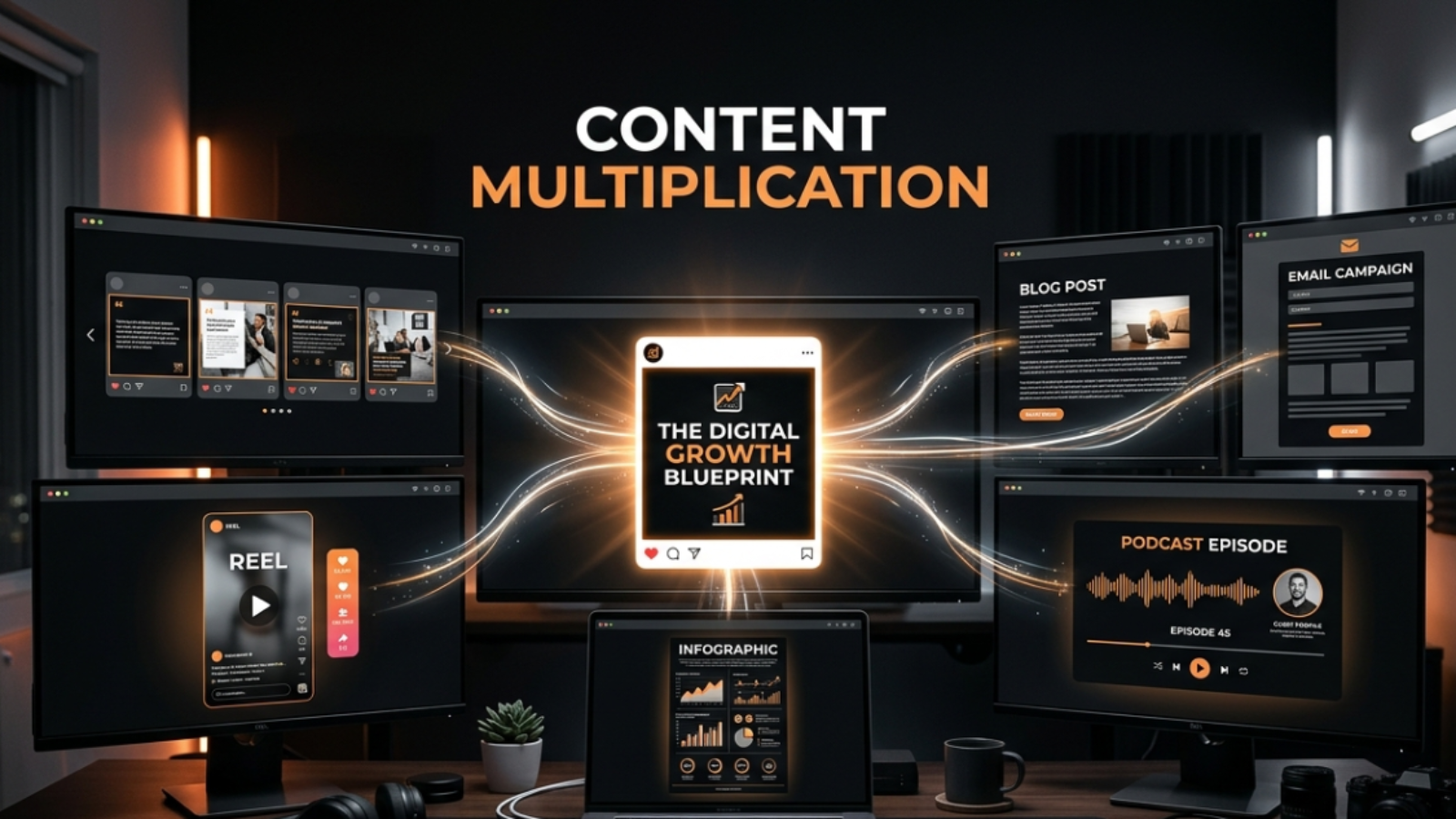
Most businesses are not short on content. They are short on a system to make their content work harder than it currently does.
The Treadmill Nobody Talks About
There is a particular kind of exhaustion that content creators and marketing teams know well. It is the feeling of having published something, watched it get a decent amount of engagement for a day or two, and then having it disappear into the archive while the clock starts ticking on what to create next. The content treadmill. You keep running but the ground keeps moving and you never actually get anywhere.
The brutal irony is that most businesses are sitting on months or years of content that has already done the hard work of being created, researched, and published. They just never built a system to make that content travel further than its original format and platform.
Content repurposing is not a shortcut or a lazy workaround. It is a strategic discipline that the most efficient content marketing teams in the world treat as seriously as original content creation. And when it is done well, it multiplies the return on every piece of content you produce without proportionally multiplying the effort.
This blog is about how to build that system, what it looks like in practice, where it goes wrong, and why your best existing content is almost certainly your most underused marketing asset.
What Content Repurposing Actually Means
Repurposing is not copying and pasting the same content across different platforms. That is spam and it damages both your brand and your discoverability. Repurposing is the practice of taking the core idea, insight, or story from one piece of content and translating it into different formats, lengths, and contexts that serve different audiences and consumption habits.
A 2000-word blog post contains multiple ideas. Each of those ideas could be a LinkedIn post, a Twitter thread, a short-form video script, an email newsletter section, a carousel slide deck, a podcast talking point, or an infographic. The blog is not the final product. It is the source material. The final products are the ten to fifteen pieces of content that branch out from it across the platforms where your different audiences actually spend their time.
The Repurposing Playbook
Turn a Blog Post Into Short-Form Video
Every well-structured blog post has three to five main points. Each of those points is a short-form video. You do not need to summarise the entire blog. Take the single most surprising or counterintuitive point from the post and build a sixty-to-ninety second Reel or YouTube Short around it. End with a hook that directs the viewer to the full blog for more depth. You are not condensing the content. You are creating a doorway into it.
From Blog Post to Carousel
Carousels are among the highest-performing content formats on Instagram and LinkedIn right now. A blog post with five distinct sections becomes a five to eight slide carousel naturally. Each section heading becomes a slide headline. The opening paragraph of each section becomes the slide copy. The conclusion becomes the final call to action slide. The carousel does not replace the blog. It introduces the ideas to a visual audience that might never have found the blog otherwise.
From Blog Post to Email Newsletter
Your email subscribers are a different audience from your social followers in a very important way: they opted in to hear from you directly. They deserve more than a link to your latest post. Take one strong insight from the blog, expand it slightly with a personal angle or additional context, and write it as the main body of a newsletter. Include a brief paragraph at the end pointing to the full blog for readers who want to go deeper. The newsletter feels original. The source material was already written.
From Blog Post to Quote Graphics
Every well-written blog contains two or three sentences that are genuinely quotable. Pull them out. Put them on clean, brand-consistent graphic templates. Post them as standalone content on Instagram, LinkedIn, or WhatsApp Status. These quote graphics perform particularly well because they are easy to save and share, they build brand recognition around your thinking, and they take approximately ten minutes to produce once the blog has already been written.
From Multiple Blog Posts to a Comprehensive Guide
If you have published several posts on related topics, they can be assembled and lightly edited into a long-form downloadable guide or ebook. This serves a completely different purpose from the individual posts. It positions your brand as an authority on the topic, it gives you a lead magnet to build your email list, and it extends the shelf life of content that would otherwise sit dormant in your blog archive.
Where Repurposing Goes Wrong
Repurposing Without Adapting for the Platform
Every platform has its own culture, its own tone, and its own content norms. A blog excerpt posted verbatim to LinkedIn feels lazy and out of place. A caption that works for Instagram feels formal and strange on WhatsApp. Repurposing does not mean copying. It means translating. The idea stays the same. The format, the length, the voice, and the context all need to be adapted for where it is landing.
Repurposing Weak Content More Broadly
Not every piece of content deserves to be repurposed. If the original post performed poorly because the idea was not strong, the insight was not original, or the execution was mediocre, spreading it further does not fix any of those problems. It just puts mediocre content in more places. Repurposing amplifies quality. It does not compensate for the absence of it.
Over-Repurposing to the Same Audience
If the same audience follows you across multiple platforms and sees the same core idea repeated five times in a week across different formats, it feels repetitive rather than strategic. Repurposing works best when different formats reach genuinely different audience segments. The person who reads your blog is often not the same person who watches your Reels. Distribute across platforms precisely because the audiences are different, not despite it.
Building a Repurposing System That Runs Without Burning You Out
Start With a Content Audit
Before you create anything new, go through what you have already published. Look specifically for the content that performed best, content that covered evergreen topics that are still relevant today, and content where you had genuinely strong ideas that might not have reached a large audience the first time around. This archive is your repurposing starting point.
Build a Simple Content Map
For each piece of primary content you create, map out in advance which secondary formats you will produce from it and which platforms each format will live on. This does not need to be elaborate. A simple spreadsheet with the original piece in one column and the repurposed formats in subsequent columns is enough to build the habit of thinking about content as a system rather than a series of one-off posts.
Batch the Repurposing Work
Repurposing is most efficient when it is done in batches rather than immediately after each piece of original content. Set aside a dedicated block of time each week or fortnight to process your recent primary content into secondary formats. This batching approach prevents the creative context-switching that happens when you are constantly moving between original creation and format adaptation.
Final Thoughts: One Good Idea Deserves More Than One Audience
The content creation challenge most businesses face is not a shortage of ideas. It is a shortage of systems for making good ideas reach every audience that would benefit from them.
A genuinely useful insight does not stop being useful because it appeared in a blog post two months ago. Instead, it stops being useful when the people who need it never encounter it in the format they actually consume. In other words, the value of content is determined not only by its quality but also by its ability to reach the right audience through the right channel . Repurposing is not about recycling old content. It is about believing that the thinking you put into a good idea deserves to reach every person it could help, in whatever format they are most likely to engage with.
Work smarter with what you already have. The goldmine is already there.