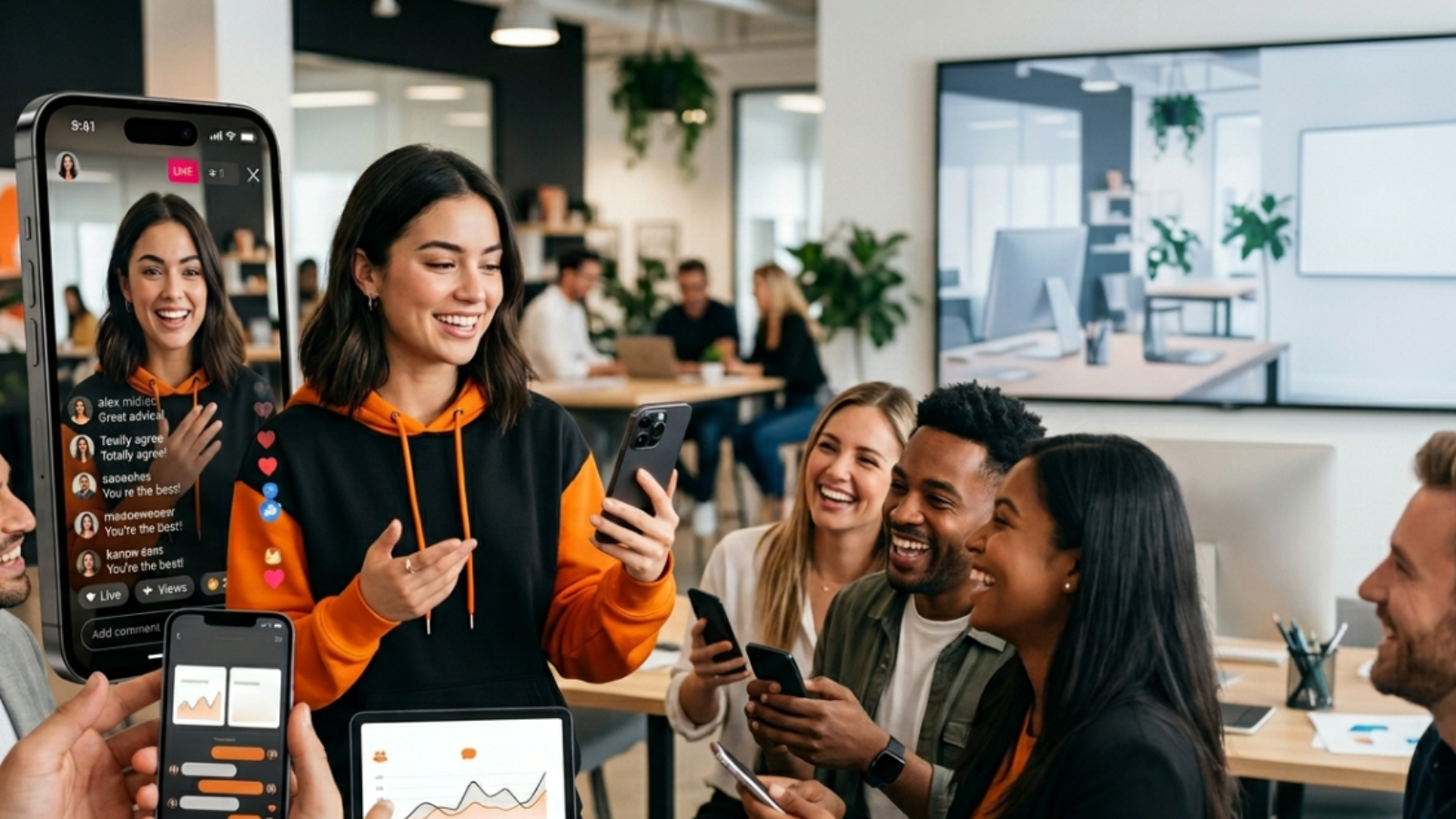

When the world’s second-largest consumer goods company calls traditional advertising lazy and pivots half its budget to creators, it is not a trend. It is a turning point.
The Statement That Shook the Marketing World
In February 2026, Fernando Fernandez stood before an audience of investors at the Consumer Analyst Group of New York conference and said something that made every advertising executive in the world sit up a little straighter. The Unilever CEO, who had taken the role in March 2025 as one of the first major leadership changes at the FMCG giant in years, delivered what amounted to a funeral notice for traditional brand advertising.
The time of lazy marketing, a couple of ads a year for a couple of innovations, is gone. Marketing today is hard work.
He rated Unilever’s own current marketing execution at six or six and a half out of ten. He said that broadcasting messages from big brands had become suspicious. And then he described the solution: a distributed network of 300,000 human voices recommending Unilever’s brands across markets, replacing the singular authority of the corporation with the trusted credibility of people.
To be clear about the scale of what was announced: two years ago, Unilever worked with roughly 10,000 advocates. Today, that number is 300,000. The company has shifted 50 percent of its total advertising budget to social media, up from 30 percent. And in its beauty and wellbeing division alone, the number of creators grew from 75,000 to 180,000 in a single year.
This is not a test. This is a fundamental reimagining of how one of the world’s most powerful marketing machines operates. And every brand, from Fortune 500 companies to local startups in Chennai, needs to understand what it means.
Why Unilever Made This Move and Why It Makes Sense
Consumer Trust Has Shifted Irreversibly
Fernandez’s phrase, broadcasting messages from big brands can become suspicious, captures something that every piece of consumer research over the last decade has been showing consistently. Trust in institutional communication, whether from governments, corporations, or traditional media, has been declining for years. In contrast, trust in people, specifically in people who seem like us and who share our interests and experiences, has remained high.
Nielsen’s global trust research, Edelman’s annual trust barometer, and dozens of category-specific studies all show the same pattern: a recommendation from a person I feel is like me outperforms a message from a brand I know is trying to sell me something. Unilever did not create this dynamic. They recognised it and built their strategy around it.
The SASSY Model: Culture First, Brand Second
Unilever’s strategic framework for this transformation is what Fernandez calls the SASSY model, an approach that emphasises contemporary relevance, social validation, and constant innovation. The philosophy embedded in it is that brands must feel current, shaped by culture rather than imposed upon it. This is a significant departure from traditional brand management thinking, which typically starts with the brand’s desired position and then finds ways to communicate it. SASSY inverts that. Start with culture. Find where the brand fits authentically within it. Then amplify through people who already live in that culture.
The Hyperlocal Ambition
One of the most revealing quotes from Fernandez’s announcement was specific and quantitative in a way that corporate vision statements rarely are. He said: there are 19,000 zip codes in India. There are 5,764 municipalities in Brazil. I want one influencer in each of them. This is not influencer marketing as most people understand it. It is not about celebrity reach or aspirational positioning. It is about hyper-local trust, the specific credibility that comes from someone in your neighbourhood, your city, your community recommending something they use themselves.
For a brand like Hindustan Unilever in India, which sells products ranging from Dove soap to Surf Excel to Horlicks across every income bracket and every geographic region, this hyper-local approach has profound implications. A micro-influencer in a tier three city in Tamil Nadu has a form of credibility with their local audience that no national brand campaign, regardless of budget, can replicate.
The Ripple Effects That Are Already Being Felt
Fortune 500 Brands Are Following Immediately
Marketing consultants reported that inbound calls from Fortune 500 brands surged immediately after Unilever’s announcement, with companies explicitly citing Unilever as the reason they wanted an influencer roadmap built. Sarah Mansfield, a former Unilever global media VP who now advises brands, put it simply: where Unilever goes, others follow. Earnings calls from General Mills, Gap, Victoria’s Secret, and Bath and Body Works echoed the same pattern, with executives outlining expanded influencer spending plans.
Creator Rates Are Already Shifting
Unilever’s 20x expansion in creator partnerships has had immediate and measurable effects on the influencer market’s pricing dynamics. Established macro creators have already moved to raise their rates as competition for their partnerships intensified. Micro-influencers in key categories have seen fees rise by around 30 percent year-on-year. The Interactive Advertising Bureau projects US creator spending will reach 37 billion dollars in 2025, up 26 percent year-on-year. Linqia’s survey of 200 marketers found 62 percent plan to increase influencer budgets in 2026.
AI Is the Only Thing Making This Scale Possible
Fernandez was explicit about the role of AI in making the 300,000 creator strategy operationally viable. Unilever increased the number of content assets it produces for beauty and wellbeing brands sevenfold in a single year. This is only possible, as Fernandez acknowledged, through the adoption of AI at scale in content creation. Managing the contracts, briefs, usage rights, and performance tracking for 300,000 creator relationships without AI infrastructure is not just difficult. It is impossible at the speed and volume this strategy requires.
The Real Risks Nobody Is Fully Solving Yet
Brand Control at This Scale Is a Genuine Problem
Jane Ostler of Kantar articulated the challenge clearly. Brands typically have little control over influencers’ output. This might be acceptable when working with a select few, but monitoring 300,000 creator relationships to ensure brand alignment, appropriate tone, accurate product claims, and no reputational risk is a fundamentally different management challenge. A single controversial creator association can damage both the creator’s relationship with their audience and the brand’s standing with consumers who trusted that creator’s endorsement.
Measurement Remains the Industry’s Biggest Unresolved Problem
Fernandez himself acknowledged that Unilever is still working to understand which variables drive genuine return on investment in this new creator ecosystem. Influencer marketing has always struggled with attribution. When someone buys Dove soap after seeing a creator recommendation, how do you isolate that recommendation as the cause of the purchase? When 300,000 creators are all contributing to brand consideration simultaneously, attribution becomes almost impossibly complex. The industry is investing heavily in measurement infrastructure, but the honest answer is that it is not yet solved.
Market Saturation Is a Growing Risk
According to Collabstr, the number of user-generated content creators grew 93 percent year-on-year in 2024. As the creator economy floods with new entrants competing for brand partnerships, the average spend per collaboration has actually declined, dropping from 214 dollars in 2024 to 202 dollars in 2025. This dynamic suggests that the creator economy, while growing rapidly, is also becoming more crowded at the entry level. The brands that win will be the ones with sophisticated systems for identifying, vetting, and partnering with creators who have genuine audience trust rather than simply large follower counts.
What This Means for Indian Businesses Right Now
The Opportunity Is Enormous and the Window Is Open
India has one of the world’s largest and fastest-growing creator economies. The infrastructure of micro-influencers across regional languages, cities, and interest communities that Fernandez’s 19,000 zip code vision imagines is already partially built in India. Brands that start building genuine relationships with regional creators now, before the market becomes as competitive and expensive as it will inevitably become, are making the single most leveraged marketing investment available to them.
Authenticity Cannot Be Manufactured at Scale
The fundamental reason Unilever’s strategy works is that creators who genuinely use and believe in a product produce content that their audiences can feel is authentic. The moment creator partnerships become purely transactional, the content loses its credibility and the strategy loses its power. Indian brands building creator programmes need to invest in finding creators who actually fit their brand world, not just creators who have the right follower count. Genuine product alignment is the only sustainable foundation for creator marketing at scale.
Final Thoughts: The Age of the Broadcast Brand Is Ending
Unilever’s pivot signals a major shift in marketing. Brands are moving away from polished, one-way advertising and toward creator-led communication. Trust is increasingly built through people rather than corporate messaging. Today, a recommendation from a trusted creator often carries more weight than a message from the brand itself.
This does not mean that brand strategy, creative excellence, or production quality stop mattering. It means that the channel through which those things reach consumers is changing in a way that is irreversible and accelerating.
Unilever called traditional advertising lazy. The brands that are paying attention are already finding a different way to work.