
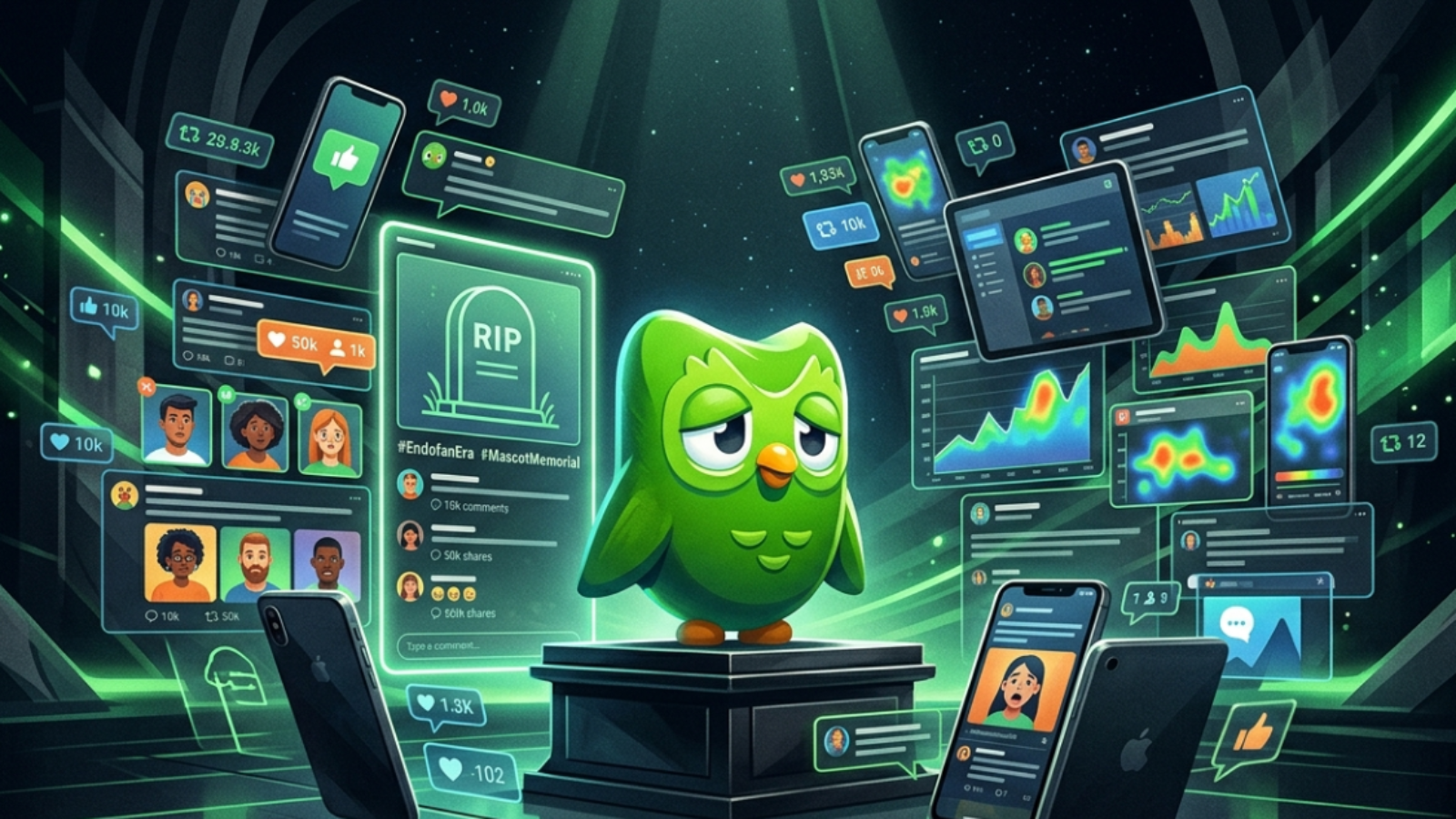
In February 2026, Duolingo announced its beloved green owl was dead. What followed was one of the most studied, most copied, and most misunderstood marketing moments of the decade.
The Day the Owl Died and the Internet Lost Its Mind
On a regular February morning in 2026, Duolingo’s social media accounts went quiet in a very specific way. A single post appeared across their platforms. No product announcement. No promotion. Just the news that Duo, the green owl who had spent years guilting millions of people into completing their Spanish lessons, was dead. Hit by a Tesla Cybertruck. Gone.
The internet did exactly what Duolingo knew it would do. It reacted. Loudly, emotionally, and at enormous scale. Memes flooded every platform within hours. News outlets covered it as a genuine cultural moment. Celebrities commented. Dua Lipa shared it organically, generating 667,000 engagement actions from a single reshare. By the time Duo was eventually resurrected through users completing their daily lessons, the campaign had accumulated over 120 million views on TikTok alone and generated 1.7 billion total impressions. For context, that was twice the social conversation of the top Super Bowl ads that same year.
The budget for this campaign was not in the hundreds of millions. The concept was essentially a scripted social media narrative with a video and some posts. What it cost in money, it more than replaced in creative courage and deep knowledge of how its community actually behaves online.
This blog is a full teardown of why the Duolingo stunt worked so devastatingly well, what most brands get wrong when they try to replicate it, and what the real lessons are for businesses that want to create genuine cultural moments without a nine-figure marketing budget.
The Years of Work Nobody Talks About
Here is the single most important context that most analysis of the Duolingo campaign leaves out: the Duo is Dead stunt did not come from nowhere. It was the culmination of years of consistent, deliberate brand personality building that made the stunt possible.
For several years before 2026, Duolingo had been building a social media presence that was genuinely unusual for a technology company. Duolingo leaned into Duo’s reputation as a passive-aggressive, guilt-tripping mascot. The team created content that acknowledged and amplified the internet’s jokes about the owl. Rather than ignoring memes, they responded in kind and became part of the conversation. Over time, they built an entire character mythology around Duo that the community actively participated in, expanded, and genuinely cared about.
By the time the death announcement happened, Duo was not just a brand mascot. He was a cultural character that millions of people had a genuine emotional relationship with. You cannot manufacture that in a single campaign. You build it over years of consistent, courageous, audience-native content. The stunt was the payoff. The work was everything that came before it.
What Made This Specific Stunt Work
It Was Completely On-Brand
The single most important reason this worked is that killing Duo was not a departure from Duolingo’s brand personality. It was a direct expression of it. Duolingo had always been irreverent, self-aware, and willing to lean into the darker edges of its own lore. A death announcement was shocking in content but completely consistent in tone. The audience did not feel ambushed by an unfamiliar brand. They felt like Duolingo had just done the most Duolingo thing possible.
It Invited Participation, Not Just Consumption
The resurrection mechanic was brilliant because it gave the audience agency. Duo could come back if users completed their language lessons. Suddenly the community was not just watching a marketing stunt. They were characters in it. The line between the campaign and the product dissolved completely, and that dissolution is exactly what turned passive viewers into active participants who shared the story because they felt like co-authors of it.
The Timing Was Precise
Duolingo did not drop this campaign in a news-heavy week when it would compete for attention. They found a quiet cultural moment, made their own noise, and owned the conversation for days. The team also moved at the speed of the internet. Responses to comments, reactions to memes, follow-up content all appeared within hours. In the attention economy, the brands that move at the pace of cultural conversation will always beat the ones that move at the pace of corporate approval processes.
It Was Emotionally Specific
Death is universally understood. Grief is universally felt. Even when the subject is a cartoon owl, the emotional architecture of loss and potential resurrection taps into something genuinely human. Duolingo wrapped a product engagement mechanic inside an emotional narrative, and the emotional narrative is what made millions of people care enough to engage, share, and talk about it long after the initial announcement.
Why Most Brands Will Fail If They Try to Copy This
Every time a campaign like this goes viral, a wave of brands attempts to replicate the approach. Most of them fail, and they fail for predictable reasons.
They Copy the Tactic Without Building the Foundation
A brand that has spent years communicating like a corporate press release cannot suddenly announce that its mascot has died and expect the internet to care. The emotional investment an audience has in a brand character is earned through years of consistent, personality-driven content. Stunt marketing without an established brand relationship is just noise. Occasionally expensive, often embarrassing noise.
They Chase Virality Instead of Relevance
The Duolingo campaign went viral because it was relevant to its community, not because it was designed to go viral. There is a meaningful difference. Content designed to go viral tends to feel desperate and calculated. Content designed to be genuinely relevant to a specific community tends to spread because the community chooses to spread it. The goal should never be the numbers. The goal should be a genuine moment for the audience you have built.
They Cannot Move Fast Enough
Most large brand organisations cannot produce, approve, and publish reactive content within hours. The legal review, the multiple approval layers, the agency briefing process, all of it adds time that kills the cultural moment. Duolingo succeeded partly because they had built an internal structure that allowed their social team to move at internet speed. That structure is a competitive advantage most brands have not invested in building.
What Any Business Can Actually Take From This
Invest in Brand Personality Before Brand Stunts
Start building a consistent, specific, human brand voice today. Not because you are planning a stunt, but because a brand with genuine personality creates the conditions where bold moves become possible. Every piece of content that feels authentically yours is a deposit into the emotional bank account your audience holds on your behalf.
Make Your Audience Part of Your Story
The resurrection mechanic was the smartest part of the entire campaign because it made the audience necessary to the outcome. Find ways to build participation into your marketing that go beyond asking people to comment or share. Give them genuine agency in your brand story. Let the outcome depend on them in some real or perceived way. That sense of stakes is what transforms passive followers into active community members.
Give Your Team Permission to Be Brave
No creative team is going to pitch a campaign where the beloved brand mascot dies unless they feel safe enough to do so. The brands that consistently produce breakthrough creative have built cultures where bold ideas are welcomed rather than filtered out by risk aversion before they ever reach a decision maker. The best marketing decisions are almost always the ones that made someone in the room uncomfortable.
Final Thoughts: The Owl Was Never Really About the Owl
The Duolingo campaign generated 1.7 billion impressions. But the number that matters more is the one that did not make the headlines: the number of people who opened the Duolingo app and completed a lesson because their owl needed to be saved. That is a product engagement metric dressed in a marketing costume, and it is the clearest possible demonstration of what great brand storytelling is actually supposed to do.
Great marketing does not just get attention. It converts attention into action in a way that feels so natural and human that the audience does not experience it as marketing at all. They experience it as participation in something they care about.
The owl died. The strategy never did.