
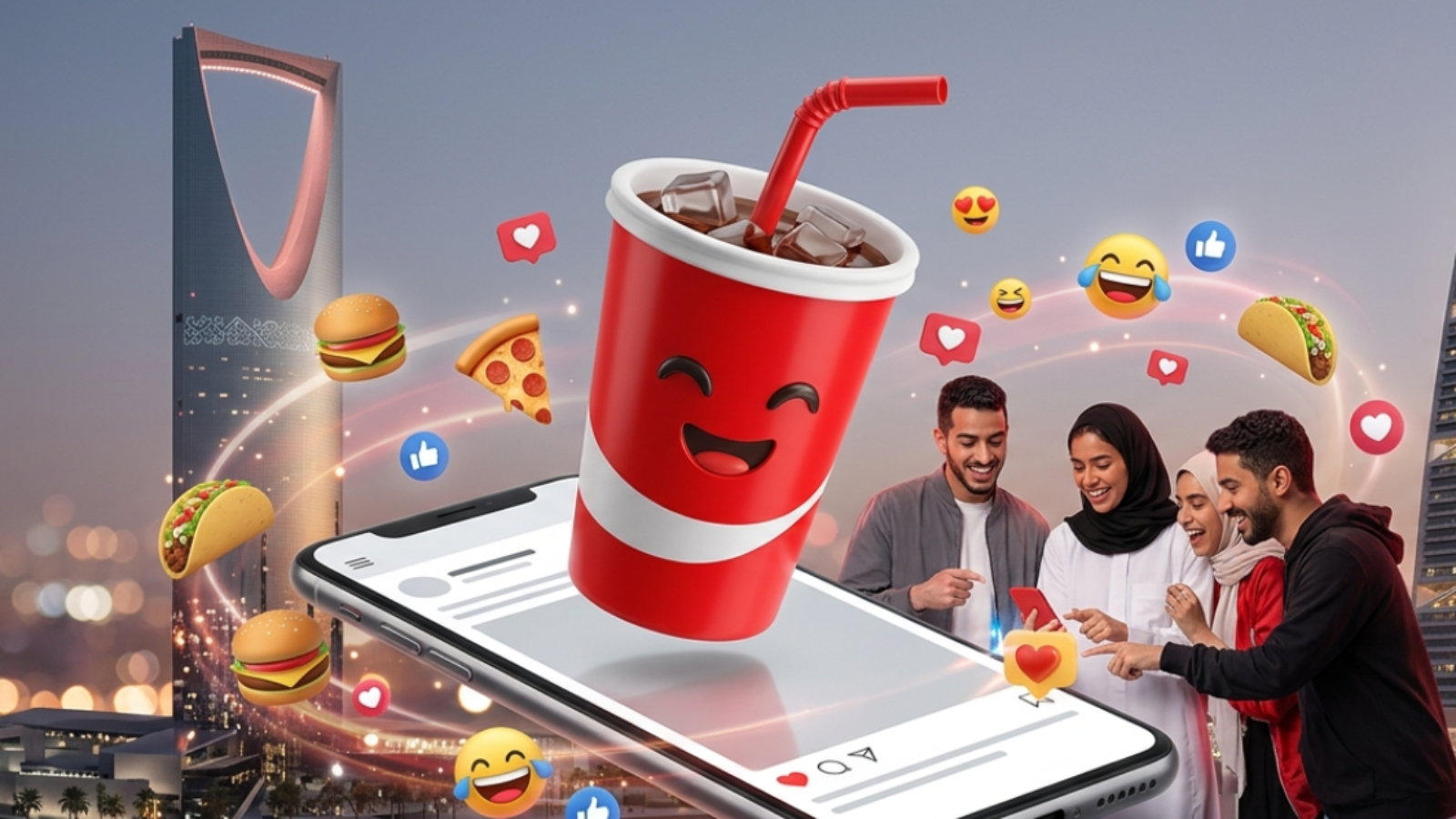
You have used that red and white cup emoji your whole life. Coca-Cola decided it was theirs. And in Saudi Arabia, they proved it.
The Question That Started Everything
What is actually inside the soda cup emoji? It is a white cup with a red stripe and a red straw, immediately recognisable to anyone who has ever typed on a smartphone. It has appeared in billions of messages, captions, and comments over two decades. But it has never officially belonged to any brand. It has just existed as a generic symbol of a cold drink.
Coca-Cola’s marketing team in Saudi Arabia asked that question and answered it boldly: it is a Coke. Launched in late 2024, the Emoji Coke campaign turned that insight into an interactive brand experience built exclusively for the Saudi market.
The results were extraordinary. During the campaign period, Coca-Cola’s market share in Saudi Arabia increased by 10 percent. Sales volume grew by 22 percent. According to Coca-Cola’s own records, these were the highest figures from any promotional campaign in the kingdom.
This blog breaks down why the campaign worked, why it resonated with Saudi Gen Z, and what brands can learn from it.
Understanding the Market Before Understanding the Campaign
To understand why this campaign was necessary, you need to understand the competitive reality Coca-Cola operates in within Saudi Arabia. Pepsi arrived in the Saudi market first and has historically led in both market presence and media spend. Coca-Cola has had to find ways to compete that go beyond simply outspending a competitor with deeper local roots.
The Saudi Gen Z demographic is one of the most digitally native audiences anywhere in the world. Saudi Arabia has one of the highest social media penetration rates globally. Gen Z consumers there are not just heavy social media users. They are sophisticated ones, very familiar with digital communication conventions, emoji culture, meme formats, and the visual language of platforms like TikTok, Instagram, and Snapchat.
Additionally, the Saudi Gen Z food culture is rich and social. Young Saudis are highly engaged with food content online, with eating out, meal experiences, and food discovery being core parts of their social lives and their digital identities. Coca-Cola’s global Meals Platform, which focuses on positioning Coke as the ideal accompaniment to meal moments, had natural resonance in this context. The Emoji Coke campaign was the local expression of that global platform, translated into the specific digital language of the Saudi Gen Z audience.
How the Campaign Actually Worked
Claiming the Emoji
The campaign’s central creative act was to officially claim the generic soda cup emoji as Coca-Cola’s. This is not as simple as it sounds. It required the campaign to create genuine cultural plausibility for the claim. Coca-Cola is the world’s most recognised soft drink brand. The soda cup emoji’s red stripe and red straw are colour associations that map naturally onto Coca-Cola’s visual identity. The campaign leaned into that natural association and made it explicit, turning an implicit brand connection that had always existed into an active marketing statement.
The Microsite and the Gamification Layer
At the heart of the activation was a custom microsite, CokeURL.com/Emoji, available exclusively to users in Saudi Arabia. On the site, participants could combine the soda cup emoji with food emojis to create virtual meal combinations. Each combination unlocked exclusive vouchers redeemable at participating Coca-Cola food and entertainment partners across the kingdom. Participants also had the chance to claim a limited-edition physical Emoji Coke cup, a real-world object that brought the digital concept into tangible form.
The gamification layer is critical to understanding the campaign’s success. Rather than asking Gen Z consumers to passively receive a message, the campaign gave them something to do. The emoji combinations created a sense of play and exploration. The vouchers tied digital engagement directly to real-world behaviour. And the limited-edition physical cup created scarcity and desirability around a branded object, turning product ownership into a status signal.
The Personalised Video Campaign
Alongside the emoji activation, Coca-Cola Saudi Arabia ran a parallel digital campaign that is a separate masterclass in modern marketing efficiency. Working with Google’s AI-powered Ads Creative Studio and local comedy creator Mohammed Shamsi, the team created one base video from which 32 fully personalised versions were generated in a matter of days using AI. Each version swapped out specific visuals and messaging to match the interests and search behaviours of different audience segments, from home and garden enthusiasts to fashion audiences to sports fans.
What would have taken a design team weeks was achieved in days. The personalisation was data-driven, built from deep research into what Saudi Gen Z was actually searching for and engaging with. The result was a set of ads that felt genuinely relevant to each specific audience rather than broadly aimed at a demographic. Personalisation at this scale, driven by AI tools rather than manual production, represents where the entire digital advertising industry is heading.
Why This Campaign Worked So Specifically for Gen Z
It Spoke Their Language Without Translating Into It
One of the most common mistakes brands make when targeting Gen Z is taking their own communication style and adding emojis or slang to it in an attempt to feel relevant. The result almost always reads as a brand trying to be young rather than actually connecting with young people. The Emoji Coke campaign avoided this entirely because it did not translate Coca-Cola’s communication into Gen Z language. It identified a piece of Gen Z’s existing digital language, the soda emoji, and built the entire campaign within that language from the start.
It Rewarded Participation Rather Than Just Requesting It
Gen Z is not a passive audience. They have grown up in a media environment where interaction is the default mode of engagement, not a bonus feature. The Emoji Coke campaign understood this by making the reward, real vouchers for real food, directly contingent on active participation with the brand experience. The exchange felt fair and genuine. You play, you get something real in return. That value exchange is the foundation of effective Gen Z marketing.
It Connected Digital Behaviour to a Physical Ritual
Meal times are social rituals for Saudi Gen Z. The campaign’s integration with food and entertainment partners meant that the digital activation translated directly into a physical experience, sitting down with friends at a restaurant, ordering food, and having a Coke. The campaign did not just create brand awareness. It created a new behavioural association between digital engagement with the Coca-Cola brand and the genuine pleasure of a meal with an ice-cold drink.
The Challenges Worth Acknowledging
Market Exclusivity Is Both Strength and Limitation
The microsite was available exclusively in Saudi Arabia. This geolocation strategy kept the campaign focused and relevant but also meant that it could not travel virally across borders the way a globally accessible campaign might. The scarcity of the limited-edition cup added desirability within the market but limited the global conversation. For a brand with Coca-Cola’s international reach, this trade-off was clearly intentional, but it is worth noting for brands considering similar region-specific activations.
AI-Powered Personalisation Requires Excellent Data
The 32-video personalised campaign was only as effective as the audience research that informed it. Identifying that Saudi Gen Z searchers were looking up skydiving, house purchases, and fashion as trending interests required deep collaboration with Google’s research tools and EssenceMediacom’s data infrastructure. For most businesses, this level of audience intelligence requires significant investment in research before a single frame of creative is produced.
What Indian Brands Should Take From This
The Indian market has its own version of the soda emoji question waiting to be answered. Every category has a digital symbol, a cultural shorthand, an existing piece of Gen Z language that a brand could claim with the right creative and the right mechanic.
The Emoji Coke campaign’s most transferable lesson is not about emojis specifically. It is about the discipline of starting with the audience’s existing language rather than the brand’s desired language. When you build a campaign in the vocabulary your audience already uses, you skip the most difficult step in any marketing challenge: getting people to pay attention to something that does not immediately feel relevant to them.
Final Thoughts: The Emoji Was Never Just an Emoji
Emojis have been part of digital language for over twenty years. In that time, brands have used them as decorative additions to their own messages. Coca-Cola in Saudi Arabia did something different: they treated an emoji as a piece of cultural territory worth claiming, built an entire interactive experience around that claim, and backed it up with personalised advertising at a scale and speed that traditional production methods could not have matched.
The results, a 10 percent market share increase and 22 percent sales volume growth, are not the kind of numbers that come from a campaign that simply looked good. They are the kind that come from a campaign that genuinely connected with how its audience thinks, communicates, and makes decisions.
The soda emoji was always a Coke. It just took the right campaign to make that real.